
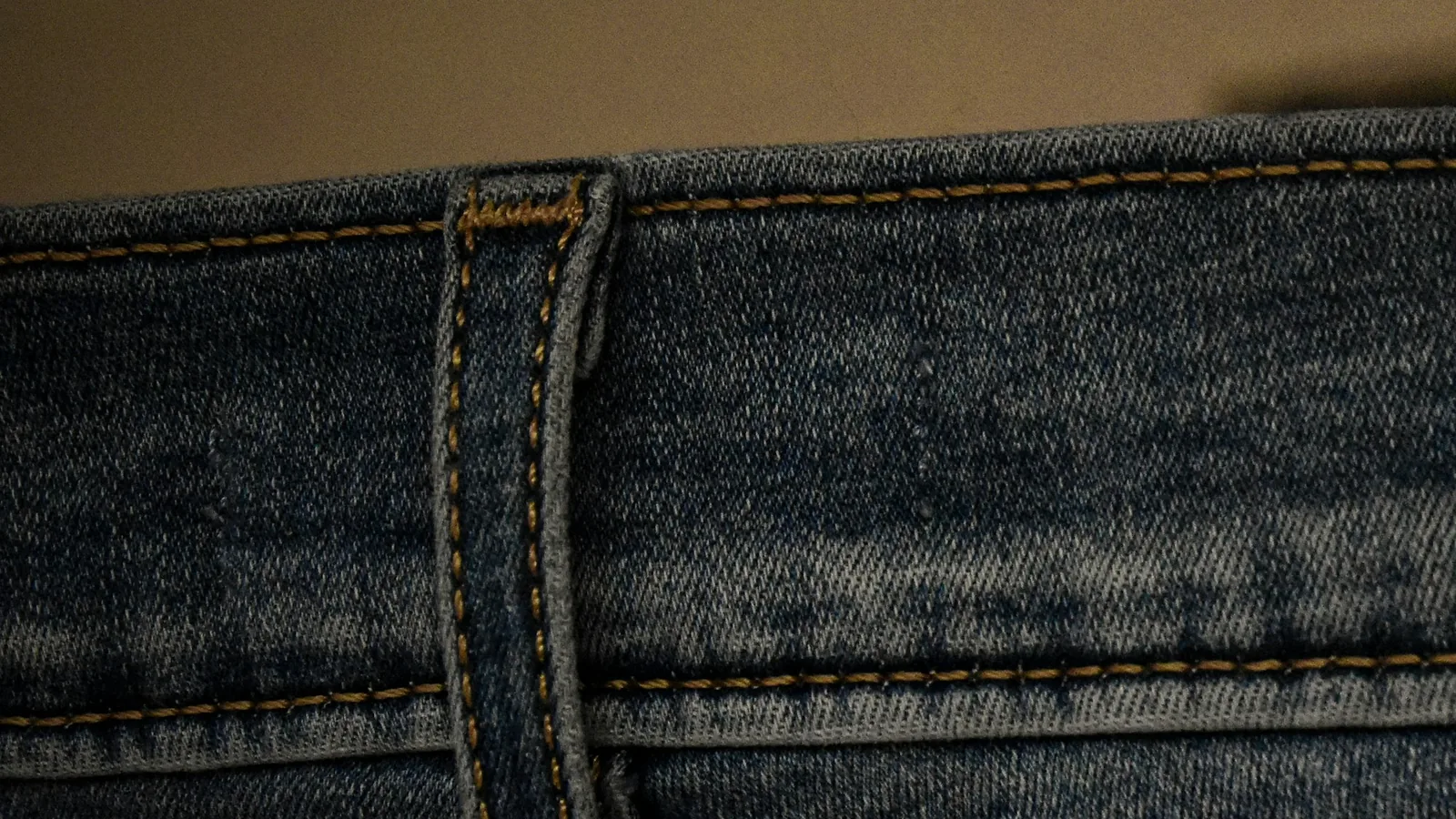
Specify waistbands, flies, pockets, seams, reinforcement, hems, and internal finishes for consistent pants production at scale.
A strong pants specification goes beyond silhouette. Waistbands, flies, pockets, seams, hems, and internal supports determine how the garment is worn and how consistently it can be produced. This guide focuses on construction choices, giving the preserved topic a different purpose from a style-and-fit overview.
Select the waistband construction
A straight waistband is cut as a relatively uniform band and can suit lower or less contoured positions. A shaped waistband uses curved pattern pieces to follow the body. A grown-on waist extends from the trouser body for a clean appearance, while a facing finishes the inside. Elasticated waists may use a casing, exposed elastic, partial elastic, channel stitching, or a knitted waistband.
Specify finished width, overlap, extension, closure, topstitching, belt loops, internal support, and seam attachment. Tailored styles may use fusing, curtain construction, grip tape, or an internal stay. Elastic styles need relaxed and extended measurements, elastic quality, recovery, join method, and a plan to prevent twisting.
Design the fly and closure as a system
Zipper flies require a zipper length and type, fly shield, facing or extension, topstitch shape, and top closure. Buttons, hooks and bars, snaps, or internal buttons may be combined. The closure should sit flat without stress at the waist and should be operable without catching the body fabric.
Button flies create a different appearance and construction sequence. Side or back zippers can keep the front clean but change dressing access and pocket options. Pull-on pants may omit a fly entirely. Hardware weight and finish should match the fabric, and reinforcement should prevent tearing at the zipper base or top closure.
| Area | Decision | Approval evidence |
|---|---|---|
| Waist | Shape, width, support, elastic, belt loops | Flat and worn measurement |
| Fly | Opening type, hardware, shield, top closure | Operation and stress test |
| Pockets | Opening, bag, reinforcement, capacity | Object and access check |
| Seams | Type, allowance, topstitch, reinforcement | Inside and outside sample |
| Hem | Turn, cuff, binding, elastic, adjuster | Finished opening and footwear check |
Build pockets for access and load
Slant front pockets are common in trousers but can gape if the opening, hip shape, fabric, or stay is wrong. Side-seam pockets are visually quiet and need enough bag depth without showing below the garment. Welt pockets require accurate cutting and reinforcement. Patch and cargo pockets add visible structure and may need pleats, bellows, flaps, or closures.
Draw the pocket bag as well as the opening. Record opening length, bag depth and width, pocketing material, seam attachment, stay, reinforcement, and intended contents. A phone or tool changes the load on a pocket. Test access while sitting and moving, and verify that the contents do not collide with the wearer or another pocket.
Choose seams and reinforcement by stress
Inseams and outseams may be overlocked and pressed, bound, flat-felled, lapped, or topstitched depending on fabric, look, and performance. Seat and crotch seams experience repeated load and need compatible stitch extension and strength. Heavy denim intersections require bulk management; stretch fabrics need seams that extend without breaking.
Bar tacks or other reinforcement may be used at pocket corners, fly bases, belt loops, and high-stress openings. More reinforcement is not automatically better: dense stitches can cut or stiffen light fabric. Approve location, length, thread, and appearance on the actual material.
Internal finishing
The inside affects comfort and durability. Check overlock coverage, binding, seam allowances, pocket bag security, zipper ends, labels, loose threads, and whether any sharp hardware touches the wearer. Unlined tailored trousers may need carefully finished internals because the product is likely to be inspected inside.
Detail knees, cuffs, and hems
Knee panels can add shaping, abrasion support, or visual interest. Articulated knees use seams or darts to build a bent form and should be positioned on the wearer, not copied blindly from another size. Linings or internal patches may change stiffness and wash behavior.
Hems can be blind stitched, turned and topstitched, cuffed, faced, bound, raw-finished, elasticated, ribbed, zipped, snapped, or adjusted with a drawcord. Define finished depth and leg opening. A cuff adds weight and consumes length; a drawcord introduces exits and safety considerations; a zipper must clear footwear and avoid the ankle.
Match construction to material and production method
Light fluid fabric may show seam impressions and need support at pocket openings. Firm canvas tolerates visible topstitching but creates bulk. Stretch woven fabric requires compatible thread, stitch, interfacing, and pocket stays. Coated or leather-like surfaces may retain needle holes and limit pressing. Knits often use different waistband, seam, and hem equipment than tailored wovens.
Decoration and garment finishing should be planned early. Embroidery can restrict a pocket bag or create backing against skin. Wash effects can distort seams, damage hardware finishes, or change thread contrast. If the garment is dyed after sewing, all threads, tapes, labels, and trims need compatible color behavior.
Approve construction with a production checklist
Set tolerances around function, not convenience. A small shift at a decorative topstitch may be visually acceptable, while the same shift at a zipper stop, welt corner, waistband closure, or pocket opening can affect use. Mark critical dimensions and matching points in the tech pack so inspection effort is concentrated where variation changes fit or operation.
- Confirm pattern, material, trims, pocketing, interfacing, and thread references.
- Inspect waistband level, fly operation, pocket access, seam appearance, and hem balance.
- Check belt-loop security, bar tacks, hardware attachment, and high-stress seams.
- Measure before and after the proposed care cycle.
- Approve the interior as carefully as the visible exterior.
Use the pant silhouette guide for range planning, then review cut-and-sew development, material sourcing, garment finishing, and the quality process for production.