
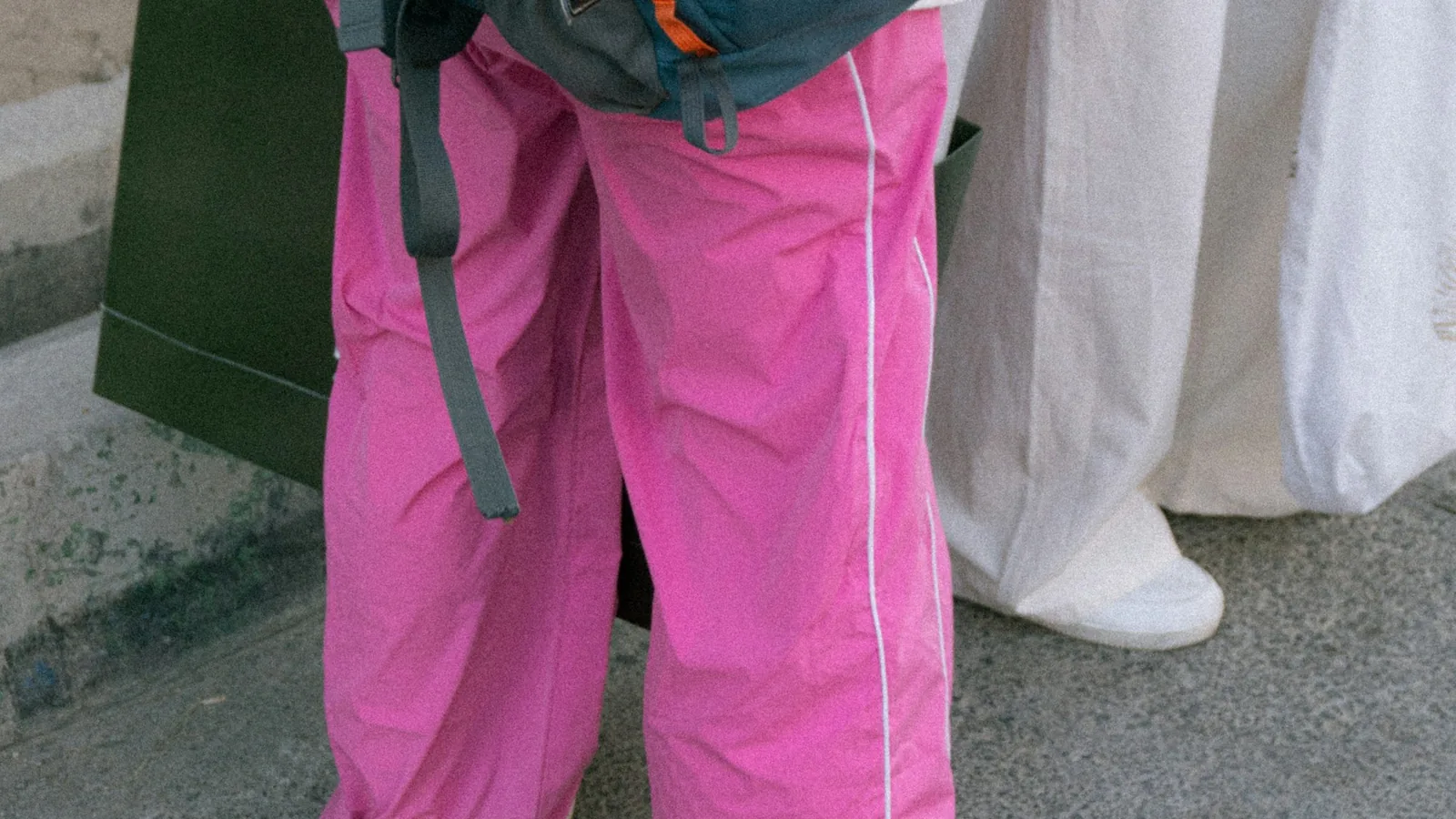
Compare pant silhouettes, rise, leg shape, materials, and fit checkpoints to plan a distinct range and clearer development brief.
Pant style names are useful shorthand, but fit is created by measurements, proportion, material, and construction. Two products called "wide-leg trousers" can differ in rise, hip ease, thigh shape, crease, and hem by enough to serve different customers. Collection planning improves when each style has a defined silhouette, wearing occasion, and reason to exist.
Map the major pant silhouettes
Straight-leg pants maintain a relatively consistent line from thigh toward hem. Slim and tapered styles narrow progressively. Wide-leg and palazzo shapes use greater volume, although a wide leg can be structured or fluid. Bootcut and flare silhouettes widen below the knee. Barrel and balloon shapes add volume through the thigh or knee before narrowing again. Joggers usually combine a relaxed upper leg with an elasticated or fitted hem.
These names do not define the complete pattern. State the rise, waist position, hip ease, thigh, knee, leg opening, inseam, and intended break over footwear. Front and back drawings should show where taper or flare begins.
| Silhouette | Visual line | Material starting point | Fit priority |
|---|---|---|---|
| Straight | Clean, consistent leg | Denim, twill, suiting, knit | Balanced thigh and hem |
| Tapered | Narrows toward ankle | Stable woven or recovery knit | Calf and foot entry |
| Wide-leg | Volume from hip or thigh | Drapey or structured by concept | Hip fall and hem sweep |
| Flare or bootcut | Fitted upper leg, wider lower leg | Denim, ponte, stretch woven | Knee position and garment length |
| Barrel | Curved volume with narrow hem | Fabric with body | Seam shaping and proportion |
| Jogger | Relaxed top, controlled hem | Fleece, jersey, nylon, woven stretch | Rise, knee mobility, cuff opening |
Use rise and waist position to control proportion
Low, mid, and high rise should be translated into measured front and back rises plus the intended body location. The visual waistline can be shaped, straight, curved, elasticated, or dropped. A high rise needs enough back length for sitting without gaping; a low rise needs secure shaping and coverage.
Waist and hip measurements interact with darts, yokes, pleats, and ease. A contoured waistband can follow the body more closely than a straight band. Elastic supports flexibility but requires a defined relaxed measurement, extension, recovery, and casing or application method. Drawcords adjust circumference but do not correct an unbalanced rise.
Balance seat, thigh, knee, and hem
Front and back crotch shapes influence comfort, drag lines, and mobility. The pattern should be evaluated standing, seated, walking, climbing a step, and bending. Extra circumference alone does not solve all movement problems; crotch extension, rise, grain, material stretch, and seam position also matter.
Thigh and knee measurements should support the intended silhouette and activity. A tapered woven trouser must still allow the foot through the opening or provide a zipper. A floor-length wide leg needs sufficient clearance and an agreed footwear reference. Cropped styles require deliberate placement rather than a standard trouser shortened without rebalancing the shape.
Match material behavior to the fit
Suiting can hold a crease and create a clean line, while fluid crepes and cellulosic blends soften wide shapes. Twill, canvas, and denim bring body for workwear, cargo, and curved silhouettes. Fleece and jersey support casual pants, but recovery and knee growth need attention. Technical wovens may add stretch, low weight, or weather-related properties, which should be verified for the actual fabric.
Assess weight, drape, stretch direction, recovery, opacity, seam slippage, pilling, shrinkage, and care. A fabric approved for a loose sample may fail when used in a close fit. Pattern approval should therefore be tied to the named bulk material or an agreed equivalent.
Distinguish style families by function
Tailored trousers
Tailored pants use controlled waist shaping, clean pockets, pressing, and often a fly closure. Pleats can add visual and functional volume, but their direction, depth, and release point must be specified. Creases may be pressed, stitched, or absent.
Cargo and utility pants
Utility styles rely on pocket placement and reinforcement. A cargo pocket should be sized for an intended object and positioned so it remains accessible without pulling the leg off balance. Knees, seat, and hems may use added panels or adjusters.
Casual pull-on and lounge pants
Pull-on styles use elastic, drawcords, or knit waistbands and may appear simple, but comfort depends on elastic tension, rise, pocket stability, and fabric recovery. Lounge products should be evaluated after sitting and washing, not only on a standing fit model.
Build a range without duplicate fits
Create a matrix for rise, hip ease, thigh shape, leg line, length, waist construction, material, price position, and occasion. If two proposed styles match across most columns, decide whether color or trim alone justifies both. A focused range might offer one tailored straight leg, one fluid wide leg, one utility shape, and one relaxed knit rather than several near-identical tapers.
Use shared blocks where appropriate, but do not force substantially different materials onto the same pattern without review. Stretch denim, rigid twill, and fluid woven fabric can require different ease and balance even when the design sketch looks similar.
Prepare a pants development brief
- Identify silhouette, rise, waist position, intended customer, occasion, and footwear.
- Provide front, back, and side views with pocket and closure details.
- Record waist, rise, hip, thigh, knee, inseam, outseam, and leg opening.
- Specify material, stretch, lining or pocketing, trims, colors, care, and finish.
- State sizes, quantity by color, destination, target timing, and approval priorities.
Continue with the cut-and-sew process, compare fabric choices, explore custom sweatpants or custom jeans, and review the quality checkpoints.