
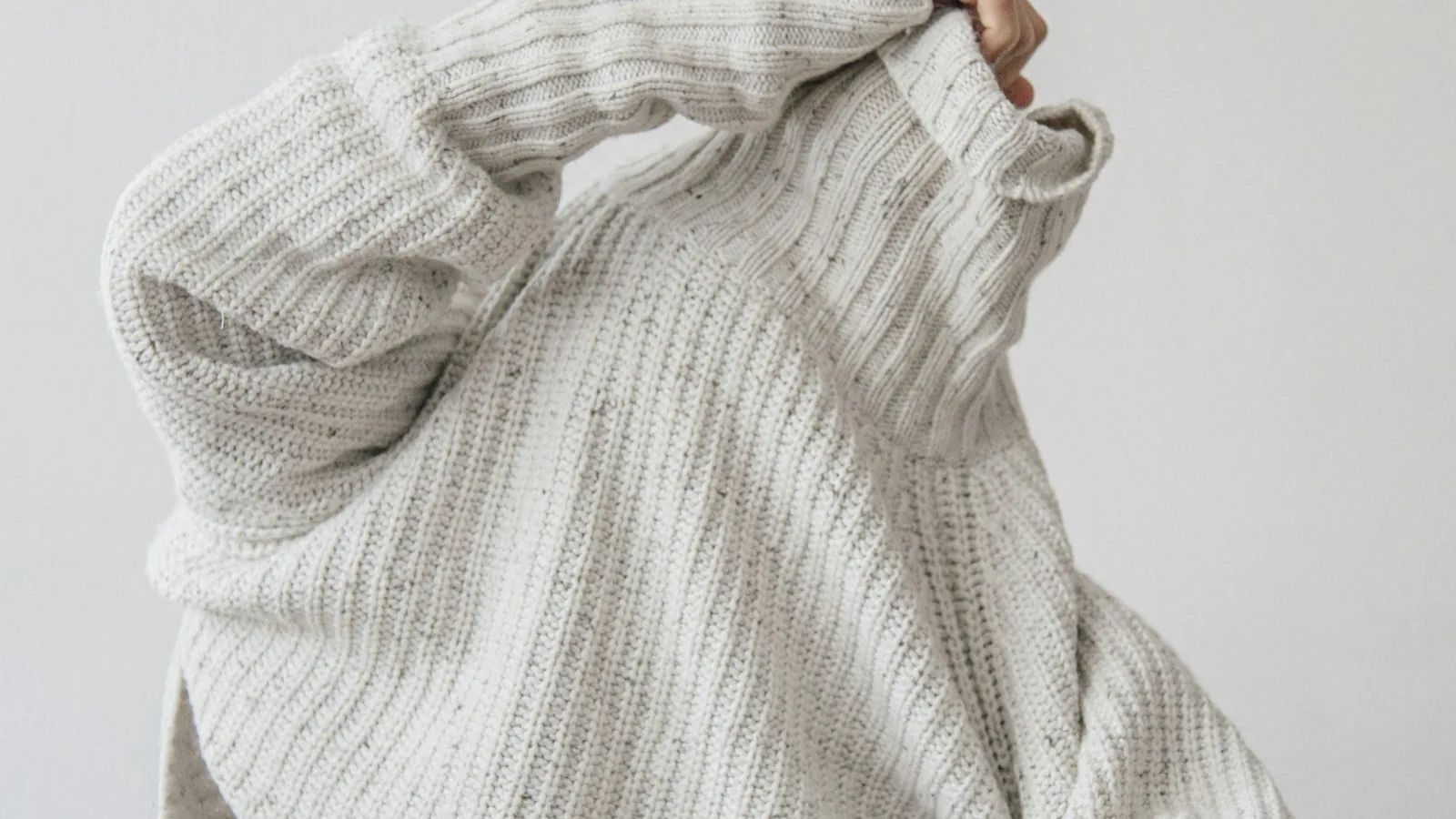
Compare sweaters and sweatshirts by construction, materials, fit, warmth, decoration, sampling, care, and the product route each requires.
Sweaters and sweatshirts can occupy the same place in a wardrobe, but they are built through different textile and manufacturing routes. A sweater is typically formed from yarn through knitting, often as shaped panels or a near-complete garment. A sweatshirt is usually cut from knitted fabric yardage, commonly French terry or fleece, and sewn like other cut-and-sew apparel.
That distinction affects silhouette, seams, decoration, warmth, minimums, sampling, care, and how a brand should write the product specification. This comparison helps designers and buyers choose the right construction for the result they want.
Compare the basic construction
| Feature | Sweater | Sweatshirt |
|---|---|---|
| Starting material | Yarn cones or packages | Knitted fabric yardage |
| Formation | Needles create panels or garment shape directly | Pattern pieces are cut from fabric |
| Assembly | Linking, seaming, or integral knitting | Overlock, coverstitch, lockstitch, and related sewing |
| Surface design | Stitch, color, texture, and engineered motifs can be knitted in | Printing, embroidery, applique, panels, and fabric treatments |
| Common edges | Knitted rib, linked neck, fashioned shaping | Applied rib bands, sewn hems, bindings |
Both are knit products in a broad textile sense: sweatshirt fleece is itself a knitted fabric. In product-development language, however, "knitwear" often refers to garments made from yarn into shaped panels, while a sweatshirt follows a fabric cut-and-sew route.
Understand sweater development
A sweater specification begins with yarn fiber, count, ply, twist, color, and hand. Gauge, stitch structure, panel dimensions, tension, shaping, rib, linking, and finishing then determine the garment. A cable, jacquard, intarsia motif, pointelle area, or engineered stripe can be part of the knitted structure rather than applied later.
Gauge helps describe the scale of the knit, but it does not define weight or quality by itself. Yarn and stitch density matter. A fine-gauge sweater can be dense or light; a coarse-gauge style can be open and airy or substantial.
Use the custom sweater guide to organize yarn, silhouette, stitch, trim, and branding decisions. If the material itself needs development, the knitting capability guide explains how yarn and structure are approved.
Understand sweatshirt development
A sweatshirt starts with an approved fabric such as French terry, loopback jersey, or brushed fleece. The team develops a paper or digital pattern, grades it, cuts fabric pieces, and sews them together. Applied rib is often used at neck, cuffs, and hem.
Fabric composition, GSM, face quality, interior loop or brush, stretch, recovery, shrinkage, skew, and rib compatibility influence the result. A heavyweight fabric does not automatically create a premium sweatshirt; collar shape, seam balance, pattern, thread, finishing, and care remain visible.
The custom sweatshirt guide maps common styles, materials, decoration, and briefing decisions for this route.
Compare fit and silhouette
Sweater shape can be created through fashioned increases and decreases, fully fashioned panels, cut-and-sew knit panels, or integral knitting. The yarn and structure may relax, grow, or contract during finishing, so finished measurements and conditioning matter.
Sweatshirt fit is controlled mainly by the cut pattern and fabric behavior. Drop shoulder, armhole depth, sleeve width, body length, rib tension, and fabric weight shape the silhouette. Brushing, dyeing, or garment washing can change dimensions, so the final processed sample should be the fit reference.
For either product, specify garment measurements, measurement method, intended ease, base size, and grade. Fit after care, not only before it.
Compare warmth and comfort
Neither category is always warmer. Warmth depends on fiber, yarn bulk, stitch or fabric structure, density, air trapped in the material, garment fit, layers, wind, and moisture. A lofty wool sweater may provide warmth at a relatively low weight, while a dense brushed fleece sweatshirt can feel warm and block more air.
- A close, fine sweater may work as a base or smart layer.
- An open sweater can breathe but allow wind through.
- French terry offers moderate warmth with a looped interior.
- Brushed fleece adds loft and a soft interior but may feel hot indoors.
Skin sensitivity, seam bulk, static, shedding, and care also affect comfort. Test the finished product in the intended climate and layering system.
Choose decoration and brand details
Sweaters can carry knitted-in patterns, engineered logos, jacquard, intarsia, embroidery, patches, labels, and selected trims. Artwork must be translated into the available gauge and stitch grid; very fine detail may not reproduce as expected.
Sweatshirts accept many surface methods because their face can provide a stable print or embroidery area. Still, pile, stretch, dye, heat, and garment thickness affect the result. Review garment printing methods and test exact artwork on the approved fleece or terry.
For both products, consider the inside. Dense embroidery can create a hard backing; labels can irritate; a heavy patch can distort a light knit.
Plan sampling and quality checks
| Sweater checks | Sweatshirt checks |
|---|---|
| Yarn, shade, gauge, stitch, panel dimensions | Fabric article, GSM, shade, shrinkage, skew |
| Linking, dropped stitches, holes, tension | Cut accuracy, seams, topstitch, rib attachment |
| Finished measurements after relaxation | Measurements after garment processing and care |
| Pilling, snagging, growth, colorfastness | Pilling, abrasion, twist, print or embroidery durability |
Approve a physical reference with final color, trims, labels, and care. Define tolerances appropriate to the construction rather than applying one generic standard.
Compare care and customer expectations
Sweaters may require gentle washing, reshaping, flat drying, or specialist cleaning depending on fiber and structure. Sweatshirts are often designed for easier laundering, but heat can still shrink cotton-rich fabric, damage elastane, affect prints, or change brushing.
Test the entire garment and write care instructions from evidence. Give customers material composition, fit, weight or warmth context, and real measurements. Avoid describing every yarn sweater as delicate or every sweatshirt as machine-dryable.
Choose the right product route
Choose a sweater when knitted texture, yarn character, shaped panels, engineered pattern, or a refined knit silhouette is central to the design. Choose a sweatshirt when the product needs a cut-and-sew fleece or terry body, familiar athletic construction, broad surface decoration, or a substantial casual layer.
A collection can use both. Keep color, proportion, and branding coherent while giving each product its proper specification and sampling route. The meaningful difference is not which name sounds more premium; it is how the garment is formed and whether that method supports the intended result.