
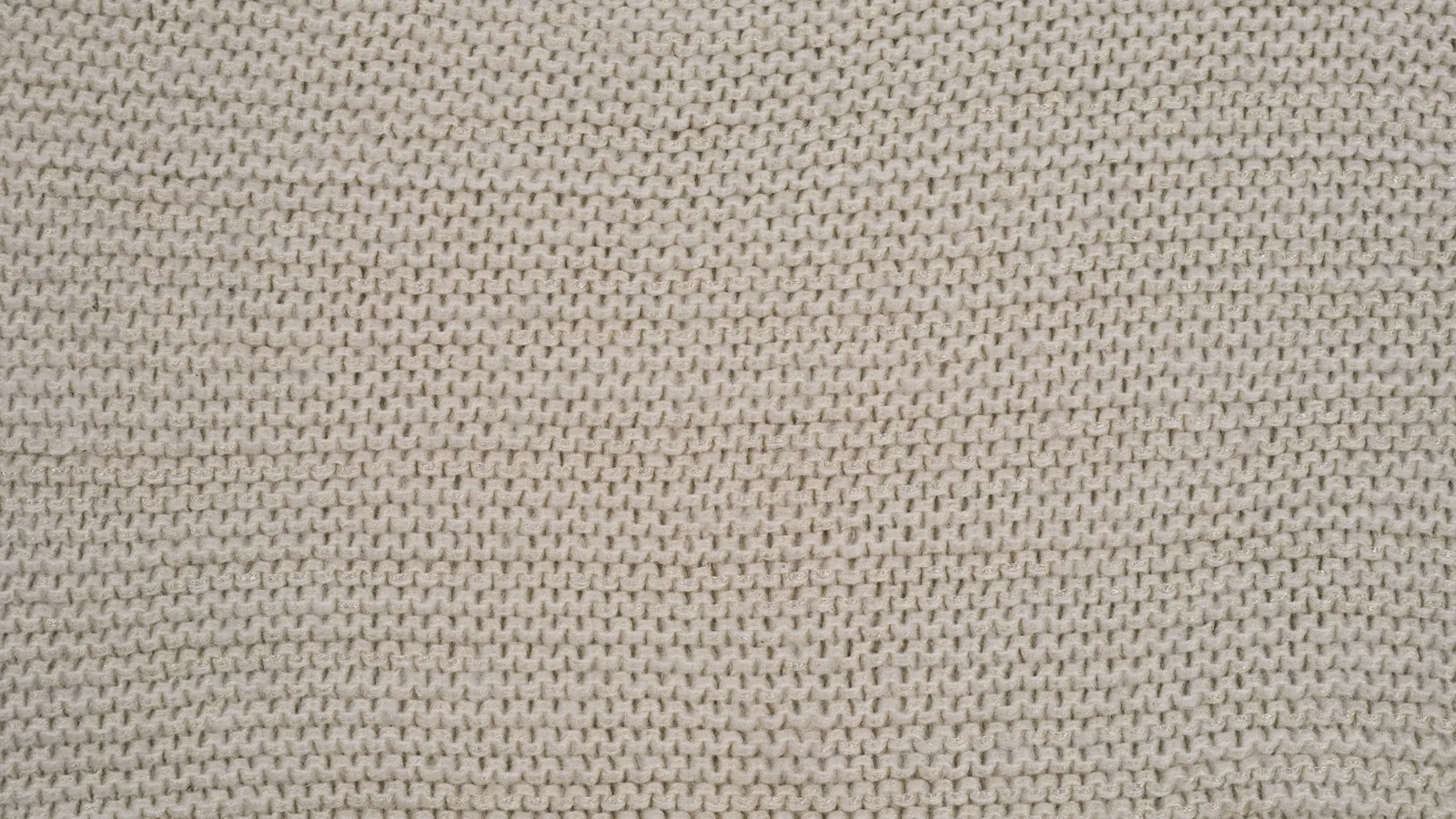
Compare knitted fabric structures, specifications, uses, stretch, recovery, and testing so you can choose the right knit for a garment.
Knitted fabric is formed from intermeshing loops of yarn rather than the crossing warp and weft yarns found in a conventional woven fabric. That looped structure can provide stretch, softness, air space, and freedom of movement, but "knit" alone does not describe how a garment will behave. Fiber, yarn, construction, gauge, weight, finishing, and dyeing all matter.
For product development, the useful question is not "Which knit is best?" It is "Which structure and specification support this fit, use, finish, care expectation, and price?" This guide provides a practical comparison and the details to include when requesting swatches or samples.
Separate fiber from structure
Fiber describes the material, such as cotton, polyester, wool, nylon, or a blend. Knit structure describes how yarn loops are arranged. The same jersey construction can be made from combed cotton for a casual T-shirt, polyester for a quick-drying top, or a cotton-elastane blend for closer fit and recovery. Those fabrics will not perform the same simply because each is jersey.
Yarn choices add another layer. Staple-spun yarn can create a softer, more natural surface; filament yarn can create a smoother, stronger, or more lustrous result. Yarn count, twist, texturing, and quality influence hand feel, coverage, pilling, and appearance. Finishes can then alter softness, shrinkage, moisture movement, brushing, sheen, or surface character.
When comparing options, use the broader fabric guide to keep composition, construction, weight, and finish as separate fields. This prevents a supplier name or marketing label from replacing a real specification.
Common knitted fabric structures
| Structure | Typical character | Common applications |
|---|---|---|
| Single jersey | Light to medium, flexible, different face and back, edges may curl | T-shirts, tanks, lightweight dresses |
| Interlock | Double-knit, smoother on both sides, stable and relatively opaque | Polos, elevated tees, babywear, dresses |
| Rib knit | Vertical ribs, high crosswise stretch, good recovery when specified well | Neckbands, cuffs, fitted tops, beanies |
| Piqué | Textured face with more structure and air space than plain jersey | Polo shirts and smart casual tops |
| French terry | Smooth face with looped back, moderate warmth without full brushing | Sweatshirts, shorts, joggers |
| Fleece knit | Back loops brushed or raised for loft and warmth | Hoodies, sweatpants, warm layers |
| Tricot | Warp knit with a smooth, stable character and good drape | Linings, sportswear, lingerie |
| Spacer or engineered knit | Layered or zone-specific structure with controlled thickness | Technical apparel, footwear, supportive panels |
Names are starting points, not complete standards. One supplier's "heavy jersey" can differ from another's in weight, width, compactness, shrinkage, and opacity. Request the measurable details and approve a physical swatch.
Understand key knit specifications
Weight and cover
GSM, grams per square metre, describes mass per area, not quality. A higher GSM can feel more substantial, but density, yarn size, fiber, and finishing change drape and coverage. Compare weight together with opacity, thickness, stretch, and intended season. For a custom tee, the T-shirt development guide shows how fabric and fit decisions interact.
Stretch and recovery
Record stretch by direction and assess how well the fabric returns after extension. Mechanical stretch can come from the knit structure; elastane can increase extension and recovery when used appropriately. A fabric that stretches far but bags at knees or elbows may be unsuitable for a fitted product. Test recovery after repeated movement and after washing.
Gauge, density, and width
Gauge relates to needle spacing and helps describe fineness, but machine type and yarn also affect the result. Course structures can feel chunky and open; finer structures can feel smooth and compact. Usable width affects marker efficiency and cost, while tubular versus open-width finishing can influence cutting and side-seam choices.
Stability and shrinkage
Looped fabrics can relax, shrink, grow, skew, or twist depending on yarn, structure, processing, and garment construction. Ask how the fabric is finished, test it using the proposed care method, and measure before and after. Pattern dimensions and rib lengths should be based on the approved, conditioned fabric rather than a generic allowance.
Match the knit to the product
Begin with the wearer and use. A loose lifestyle T-shirt may prioritize hand feel and drape. A fitted training top may prioritize recovery, moisture management, seam comfort, and opacity under stretch. A sweatshirt may need warmth, shape retention, decoration compatibility, and a rib that balances the body fabric.
- Everyday tops: compare jersey or interlock for drape, opacity, collar stability, and print surface.
- Sweat sets: compare French terry and brushed fleece for warmth, interior feel, weight, and shrinkage.
- Polos: assess piqué or interlock for texture, collar support, snagging, and laundering.
- Activewear: evaluate stretch in both directions, recovery, opacity, abrasion, drying, and seam choice.
- Knitwear: specify yarn, gauge, stitch structure, panel shape, linking, and finished garment measurements.
Fabric made directly into shaped panels is a different development route from cutting garment pieces out of yardage. The fabric knitting capability guide explains where custom knitting enters the process, while the custom knitwear guide focuses on finished products.
Evaluate swatches and samples
Condition swatches in the environment where you will compare them, label each option, and avoid judging color and hand under inconsistent lighting. Handle a large enough piece to see drape and recovery. Stretch printed or dyed samples rather than assuming the surface will behave like undyed fabric.
- Confirm composition, construction, GSM, usable width, color route, and finish.
- Measure stretch, recovery, opacity, and dimensional change relevant to the product.
- Test the proposed print, embroidery, bonding, or wash on the actual fabric.
- Make a garment sample and review neckline, seams, hang, mobility, and care.
- Keep an approved cutting or fabric reference for bulk comparison.
Laboratory tests should be selected around the product and destination rather than treated as a generic badge. Depending on use, a program may need evidence for colorfastness, pilling, abrasion, bursting strength, dimensional stability, stretch and recovery, or restricted substances. Agree on the methods and acceptance criteria before bulk material is committed.
Write a useful knit fabric brief
A fabric request becomes much clearer when it connects measurable targets to the garment. Include:
- product, target customer, season, and intended activity;
- preferred composition and acceptable alternatives;
- knit structure, target GSM range, hand feel, drape, and opacity;
- stretch direction, recovery expectation, and whether elastane is acceptable;
- color standard, dye or print plan, finishing, and wash character;
- care expectations, test requirements, quantity, colors, and delivery market.
Leave room for informed alternatives. A supplier may propose another construction that reaches the same performance target with better availability or less risk. Ask what changes, request a swatch, and evaluate the garment result rather than approving a name alone.
Choosing knitted fabric is a chain of connected decisions. Define the use, separate structure from fiber, compare physical evidence, and document the approved result so the sample and bulk production are judged against the same standard.