
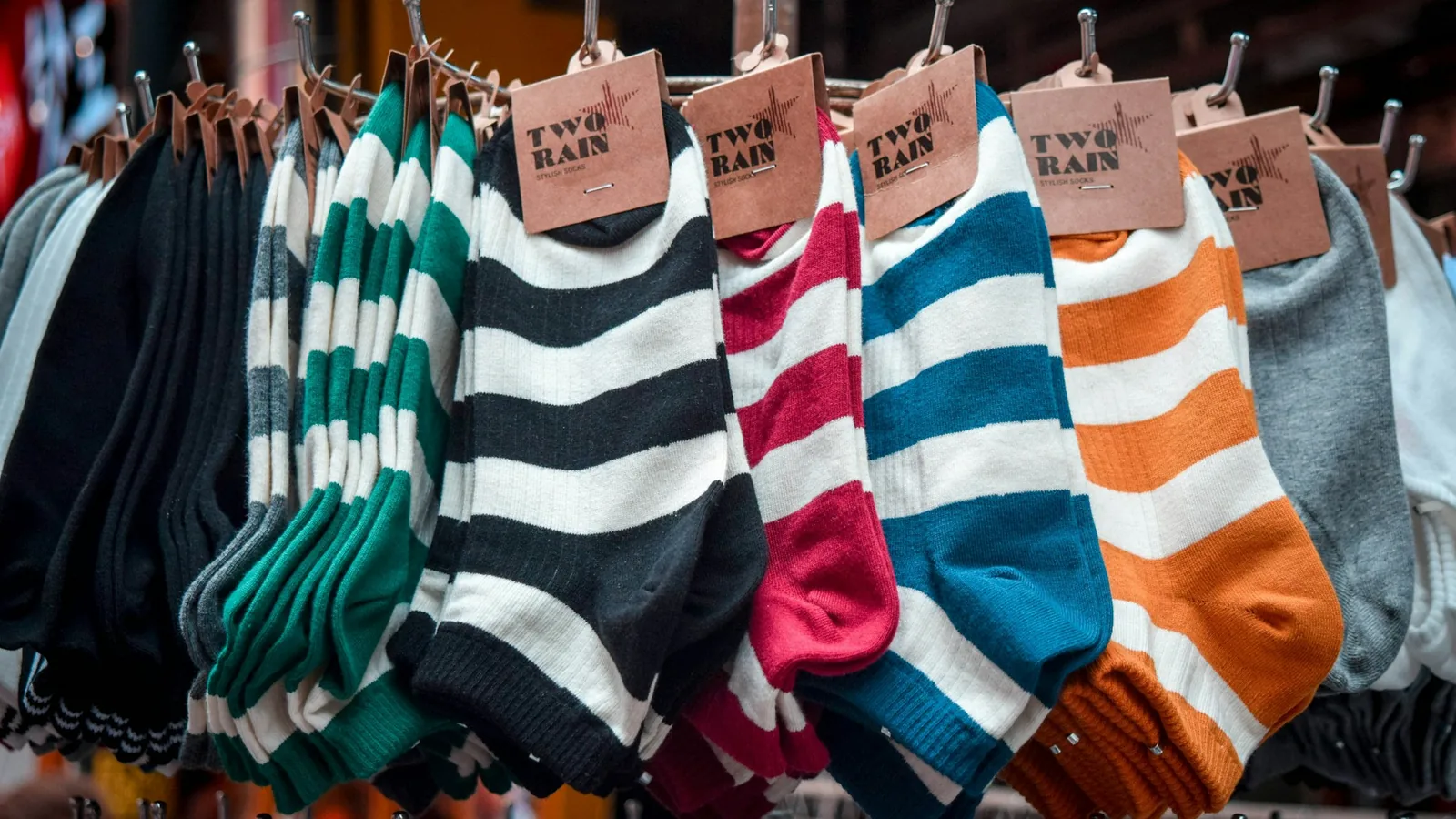
Choose a sock manufacturer by machine capability, yarn, knit structure, fit, artwork, testing, production evidence, costs, and bulk control.
Sock manufacturers specialize by machine cylinder, needle count, yarn, gauge, size, cushioning, compression, toe closure, and end use. A supplier making promotional crew socks may not be equipped for fine dress socks, technical running socks, or a close-fitting product with engineered zones.
Instead of ranking nine companies whose capabilities can change, this guide shows how to define the sock, verify knitting and finishing capability, approve size and performance, compare quotations, and select a current partner.
Define the sock and end use
State wearer, activity, shoe type, climate, length, size range, target thickness, fit, cushion zones, support objective, colors, artwork, quantity, care, and destination. A hiking sock, football sock, formal sock, grip sock, and everyday athletic crew require different materials and structures.
The custom socks guide can help organize styles, yarns, cushioning, branding, and a buyer brief.
Translate design into knit structure
A sock is shaped on a knitting machine rather than cut from flat yardage. Confirm machine type, cylinder diameter, needle count, gauge, yarn feeds, heel and toe method, welt, rib, terry zones, mesh, arch area, and toe closure. Artwork must be translated into the available stitch grid and yarn-color limits.
| Feature | Design purpose | Approval point |
|---|---|---|
| Ribbed welt | Hold at the leg | Pressure, recovery, height, and stretch |
| Terry cushioning | Loft and impact comfort | Placement, thickness, compression, drying |
| Mesh zone | Reduce bulk and increase openness | Strength, transparency, exact location |
| Reinforced heel/toe | Manage repeated abrasion | Yarn, coverage, transition, color |
| Seamless-style toe | Reduce prominent seam bulk | Closure method, ridge, strength, finish |
The knitting guide explains why yarn, gauge, structure, and finishing must be approved together.
Select yarns by function
Specify fiber composition, yarn count or size, construction, color, finish, and source article. Cotton, wool, polyester, nylon, elastane, and blends each behave differently depending on yarn and knit. A fiber name does not prove moisture management, odor control, warmth, durability, or softness.
Elastic and plating yarns influence fit and recovery across the foot and leg. Check skin contact, heat, shrinkage, pilling, abrasion, drying, and care. Require evidence for recycled content, antimicrobial finish, certified fiber, or performance claims on the exact supplied yarn.
Verify specialist machines and processes
Ask which exact machine family and needle range will produce the sample and bulk. Inspect knitting, toe linking or closing, boarding or heat setting, washing, pairing, inspection, labeling, and packing. Confirm whether dyeing, yarn preparation, grip application, embroidery, or printing is subcontracted.
Request production evidence for similar size, thickness, artwork complexity, and end use. A catalog image cannot confirm the machine or yarn used. Match legal seller, factory, and bank details and verify the production location through an independent visit or live walkthrough.
Record where the yarn is made or dyed and where knitting, toe closing, finishing, decoration, and packing occur. The seller's address or export port does not establish production location or country of origin. Use destination-market customs guidance when operations cross borders, and approve any change of factory or subcontractor before production moves.
Fit and grade the size range
Define foot-length and circumference ranges for each size, not only shoe-size labels that vary by market. Fit standing, walking, running, or within the intended shoe. Check heel placement, toe space, arch, welt pressure, slipping, twisting, bunching, and cushion location.
Review representative sizes because artwork, zones, and rib length may need separate programs rather than automatic scaling. After washing, remeasure foot length, leg length, width, and stretch. Compression or medical claims require specialist design, appropriate testing, and regulatory review; do not infer them from a tight welt.
Approve artwork, color, and branding
For jacquard designs, approve a digital stitch map and a physical sample. Fine diagonal lines, small text, and many colors may not reproduce cleanly. Confirm how floats are managed inside and whether artwork changes stretch.
Embroidery, grip print, transfer, or silicone applications need position, thickness, adhesion, stretch, and care testing. Coordinate size bands, woven labels, header cards, belly bands, hooks, and pair packaging with the labels and packaging guide.
Test the finished sock
- Measure and fit before care.
- Complete the intended activity in the relevant footwear.
- Wash and dry repeatedly using the proposed instructions.
- Inspect shrinkage, recovery, pilling, abrasion, toe closure, grip, and color.
- Check pairing, size identification, artwork, loose yarn, and contamination.
Product-specific laboratory checks may include composition, dimensional change, colorfastness, pilling, abrasion, bursting strength, stretch and recovery, and restricted substances. Define acceptance criteria rather than collecting reports with no release rule.
Compare quotations on one specification
Normalize yarn articles, machine or needle specification, size range, colors, artwork, cushion, finishing, labels, packing, quantity, tests, inspection, currency, and delivery term. Ask whether the minimum applies per design, color, size, or yarn dye lot.
Include programming, samples, yarn development, tests, freight, duty, and defect replacement in landed cost. Confirm ownership and future use of custom artwork files or molds.
Ask how quotation validity, yarn price changes, unused custom yarn, and reorder setup are handled. Compare payment milestones against approved knit-offs, inspection, and documented shipment evidence.
Control bulk and score suppliers
Approve yarn, color, first knit-off, size set, artwork, and final pre-production pair. Inspect early production for dimensions, yarn, zones, closure, appearance, and stretch. Final checks should include matched pairs, size, quantity, labels, packing, and test records.
Use the quality framework and score technical sample, fit, machine match, yarn evidence, verified factory, quality process, communication, commercial fit, and corrective action. The best current partner is the one that controls the actual knitted product, not the one attached to a static rank.
Supplier capabilities, ownership, minimums, locations, and commercial terms change. Treat any comparison as a starting point and verify current details directly before making a purchasing decision.