
Learn trucker hat anatomy, crown profiles, mesh, visors, closures, sweatbands, decoration, fit, and tech-pack requirements.
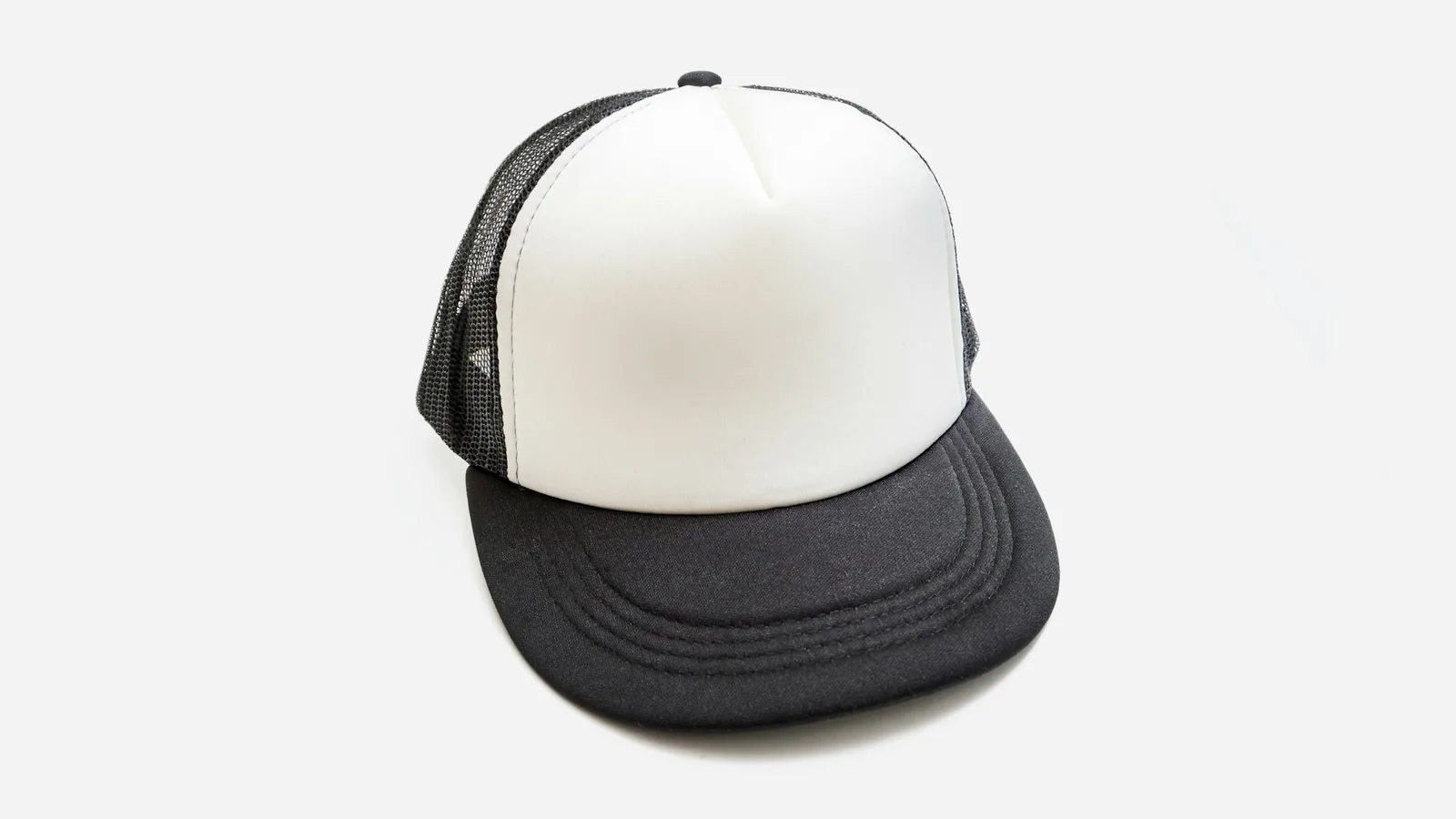
A trucker hat is a structured or semi-structured cap recognized by a front crown, breathable mesh back, curved or flat visor, and adjustable closure. The familiar outline grew from promotional and workwear contexts, but modern versions range from heritage foam-front caps to refined streetwear and uniform products. The name identifies a family; panel shape, crown height, mesh, visor, closure, and decoration define the actual cap.
Understand the anatomy of a trucker hat
The front crown carries the main shape and decoration. Side and back panels provide fit and ventilation. A top button joins the crown, eyelets may add ventilation, and internal seam tape covers panel joins. The visor combines a shaped insert with top and bottom fabrics. A sweatband finishes the lower inside edge. The back closure adjusts circumference.
Classic trucker caps often use two front panels joined by one center seam plus four mesh panels, creating a six-panel layout. Five-panel versions may use one broad front panel with side and back sections, which provides an uninterrupted decoration area. Hybrid patterns vary, so drawings should number every panel.
| Component | Common options | Approval point |
|---|---|---|
| Front | Foam-backed, twill, canvas, performance woven | Crown shape and decoration support |
| Back | Poly mesh, softer knit mesh, perforated fabric | Hand, stretch, airflow, color |
| Visor | Curved, flat, semi-curved; contrast underside | Shape, length, rows of stitching |
| Closure | Plastic snap, strap, buckle, hook-and-loop | Adjustment range and comfort |
| Sweatband | Cotton, blended woven, performance material | Width, softness, absorption, seam |
| Branding | Embroidery, patch, applique, print, label | Scale, placement, crown compatibility |
Choose crown height and structure
High-profile crowns create a taller front and are associated with traditional foam truckers and bold patches. Mid-profile crowns reduce height while keeping a recognizable shape. Low-profile versions sit closer to the head. These terms vary, so record front crown height, side height, seam lengths, and worn reference.
Structured fronts use foam, buckram, fusing, or another support to hold shape. Unstructured fronts rely more on shell material and pattern. Foam-front caps can support printed or patched decoration but vary in thickness and recovery. A firm woven front may suit detailed embroidery if needle penetration and puckering are controlled.
Fit should be reviewed from front, side, and back. Check crown collapse, pressure at the forehead, top shape, ear clearance, and the transition from solid front to mesh. The sample should be worn across the intended head-size range, not approved only on a display form.
Select mesh by more than appearance
Mesh differs in hole size, yarn, stiffness, stretch, recovery, sheen, and abrasion. Traditional polyester mesh can create a firm open back. Softer meshes may improve hand but change crown shape. Perforated woven fabric can create a cleaner technical look while behaving differently from knit mesh.
Approve mesh color against the front because black, white, and dyed shades can vary by material. Check snagging, edge stability, seam comfort, color transfer, and how the mesh responds to heat during decoration or finishing. "Breathable" should be treated as a comparative design direction unless supported by a defined test.
Specify visor, sweatband, and closure
Visor drawings should state length, width, curve, insert material, stitch rows, edge, top fabric, and underside fabric. Flat visors may be delivered flat or intended for wearer shaping; curved visors need a repeatable form. The insert must withstand expected use without creating sharp edges.
Plastic snapbacks are strongly associated with trucker hats and provide a visible adjustment scale. Specify color, number of positions, attachment, and minimum-to-maximum circumference. Alternatives include fabric straps, buckles, elastic, or hook-and-loop closures. Internal ends should not scratch the wearer.
The sweatband affects fit and comfort. Define material, width, cushioning, color, and attachment. Labels and seam tape should lie flat. If moisture-management or antimicrobial language is planned, obtain evidence for the supplied component and finished product.
Match decoration to the crown construction
Direct embroidery can produce durable dimensional branding, but stitch count, backing, hooping, and crown seams affect the result. Five-panel fronts give a broad uninterrupted area; six-panel designs place a seam through the center. A patch can bridge design complexity and may be embroidered, woven, printed, rubber-like, leather-like, or appliqued, subject to appropriate material and claims.
Screen print and transfers work best when the front surface and heat tolerance are compatible. Foam can mark or distort under pressure and heat. Approve the exact logo size and placement on the worn cap. Small type, thin borders, and detailed art may need simplification for the chosen method.
Distinguish a trucker from a baseball cap
Baseball caps commonly use the same or similar fabric across all crown panels and may include stitched eyelets. Trucker hats characteristically use open mesh or a mesh-like back and often a more pronounced front. Both can have six panels, adjustable closures, curved visors, and embroidery, so the categories overlap.
For product development, choose based on the desired crown, ventilation, decoration area, wearer, and brand language rather than debating the label. A separate trucker versus baseball cap comparison can support merchandising, while the tech pack must still define every component.
Prepare a trucker hat tech pack
- Number the panels and define crown profile, structure, and head-size range.
- Specify front, mesh, visor, insert, sweatband, seam tape, button, and closure.
- Record color references, decoration method, artwork, size, and placement.
- Approve fit, symmetry, visor shape, closure operation, seams, and decoration.
- Document labels, packing support, carton quantity, destination, and timing.
Continue with custom truck caps, baseball cap development, the custom hat overview, and embroidery options.