
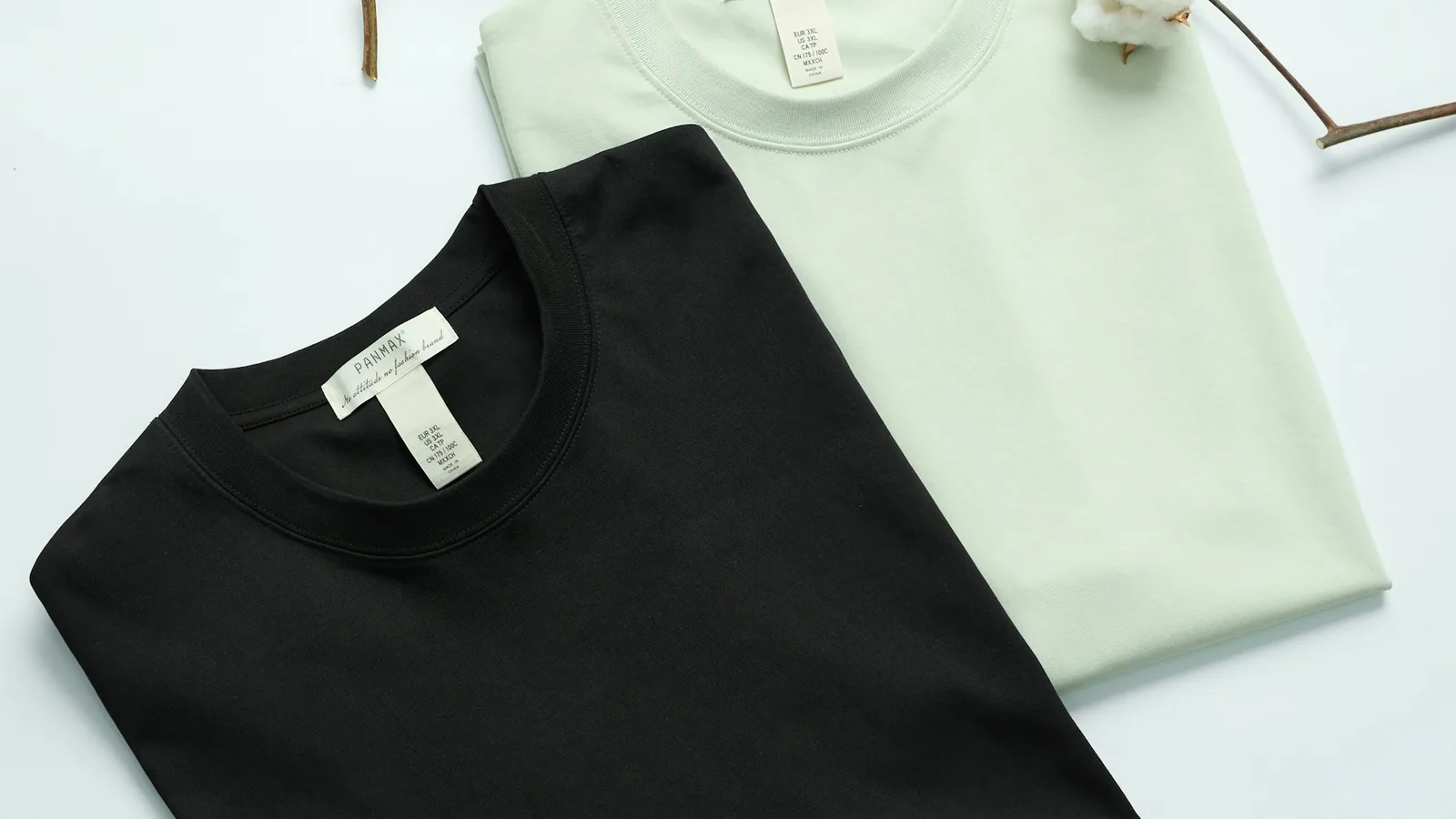
Compare womenswear T-shirt silhouettes, necklines, sleeves, materials, lengths, hems, decoration, and grading for development.
A womenswear T-shirt range can vary through silhouette, neckline, sleeve, length, material, and finish without losing the clarity of a core product. Style labels such as fitted, boyfriend, baby tee, and oversized are not universal measurements. Brands should translate each look into a fit block, proportion, fabric behavior, and defined customer use.
Define the T-shirt silhouette
Classic or regular fits balance ease through chest, waist, and hem. Fitted tees follow the torso more closely and often rely on stretch and shaped side seams. Relaxed fits add ease without necessarily changing the shoulder. Boyfriend and oversized directions may use dropped shoulders, wider bodies, longer sleeves, and altered lengths. Boxy tees use a straighter, wider proportion, while baby tees are typically shorter and closer.
Do not create an oversized style by scaling every measurement equally. Define shoulder drop, chest ease, armhole depth, sleeve width, body length, and sweep. A fitted style also needs front and back shaping that respects bust and hip rather than simply reducing the side seam.
| Style | Silhouette cue | Material direction | Fit priority |
|---|---|---|---|
| Classic tee | Balanced ease and standard length | Cotton or blended jersey | Neck, shoulder, bust, and hem balance |
| Fitted tee | Close torso and narrower sleeve | Recovery stretch jersey or rib | Opacity and stretch recovery |
| Boxy tee | Wide straight body, often shorter | Jersey with enough body | Shoulder and body proportion |
| Oversized tee | Dropped shoulder and generous volume | Mid- to heavyweight jersey | Sleeve balance and neckline stability |
| Baby tee | Short, close, compact | Fine stretch jersey or rib | Length, bust shaping, hem recovery |
| Longline tee | Extended body coverage | Stable or fluid jersey by look | Hip ease and vertical growth |
Choose and stabilize the neckline
Crew, high crew, scoop, V, boat, square, U, and mock necklines change the character and fit of a tee. Record neckline width and drop from named points. A front view alone does not define the back neck or shoulder relationship.
Neckbands may use self fabric, rib, binding, facing, or a clean-edge method. The band length must suit the fabric stretch and opening curve. Too long creates waving; too short creates puckering or makes dressing difficult. V and square necks need controlled corners. Wide boat necks may require shoulder reinforcement so they do not grow.
Use sleeve shape to refine the product
Cap, short, elbow, long, raglan, dropped, puff, flutter, and fitted sleeves each need a separate pattern decision. Cap sleeves provide little underarm coverage and can pull if the armhole is not balanced. Raglan seams alter shoulder fit and create opportunities for color blocking. Puff sleeves require volume distribution, gathering, pleats, elastic, cuffs, or internal support.
Record sleeve length, bicep, opening, cap height or raglan line, and hem finish. Fit with arms forward and raised. A narrow sleeve opening can feel restrictive even when the body is relaxed.
Match jersey, rib, and weight to the fit
Cotton jersey is a common starting point, while blends can alter softness, drape, recovery, drying, and durability. Combed or compact yarn descriptions should be connected to a physical sample. Rib structures provide stretch and a close silhouette. Interlock can offer a smoother, more substantial surface. Modal, viscose, or lyocell blends may increase fluidity and need support at seams and hems.
Weight affects opacity, drape, and structure but is not a quality score. A light fitted white tee needs careful opacity testing; a heavyweight oversized tee needs neckline and shoulder stability. Evaluate shrinkage, spirality, pilling, stretch, recovery, colorfastness, and skew after the proposed care cycle.
Set length and hem around styling
Cropped, waist, high-hip, full-length, longline, curved, stepped, and split hems create different outfit relationships. Define front and back lengths plus side seam and curve points. Cropped does not identify one body location, and a style may feel shorter when the bust lifts the front.
Common finishes include coverstitched turns, twin-needle hems, bands, raw edges, binding, and shaped facings. Wide sweep or curved hems may wave if the finish is too heavy. Side splits require reinforcement and clean internal finishing.
Plan decoration around stretch and placement
Screen print, digital print, transfers, puff effects, embroidery, applique, wash, and dye treatments each interact with fabric weight and stretch. Place artwork using measurements from stable garment points, not only a visual mock-up. Review placement across sizes and on the body because bust and shoulder shape affect the visible position.
Large dense prints can reduce drape and breathability. Embroidery adds weight and backing. Garment dye or wash can change dimensions and shade. Approve decoration on the same fabric, color, and fit intended for bulk.
Build a focused T-shirt range and brief
Grading should protect the design idea across the range. A dropped shoulder may need controlled growth so it does not overwhelm smaller sizes or lose proportion in larger sizes. Neck openings, rib widths, artwork scale, crop length, sleeve opening, and hem sweep may use different rules from chest circumference. Review a size set on appropriate wearers and note any deliberate size-dependent adjustment.
Also plan how colors and fabrics share a block. A dark compact jersey, pale lightweight jersey, and fluid rib can fit differently even at the same nominal weight. If multiple materials are offered in one style, confirm whether each can use the same pattern or needs a controlled pattern or measurement adjustment.
- Assign each style a clear silhouette, customer, length, and wearing occasion.
- Record shoulder, chest, waist, sweep, length, armhole, sleeve, and neckline.
- Specify fabric structure, weight, stretch, recovery, color, and care.
- Approve fit across the size range plus shrinkage, spirality, opacity, and hems.
- Document artwork, labels, packaging, quantities, destination, and timing.
Use custom T-shirt development, womenswear manufacturing, the fabric guide, printing options, and quality review to develop the product further.