
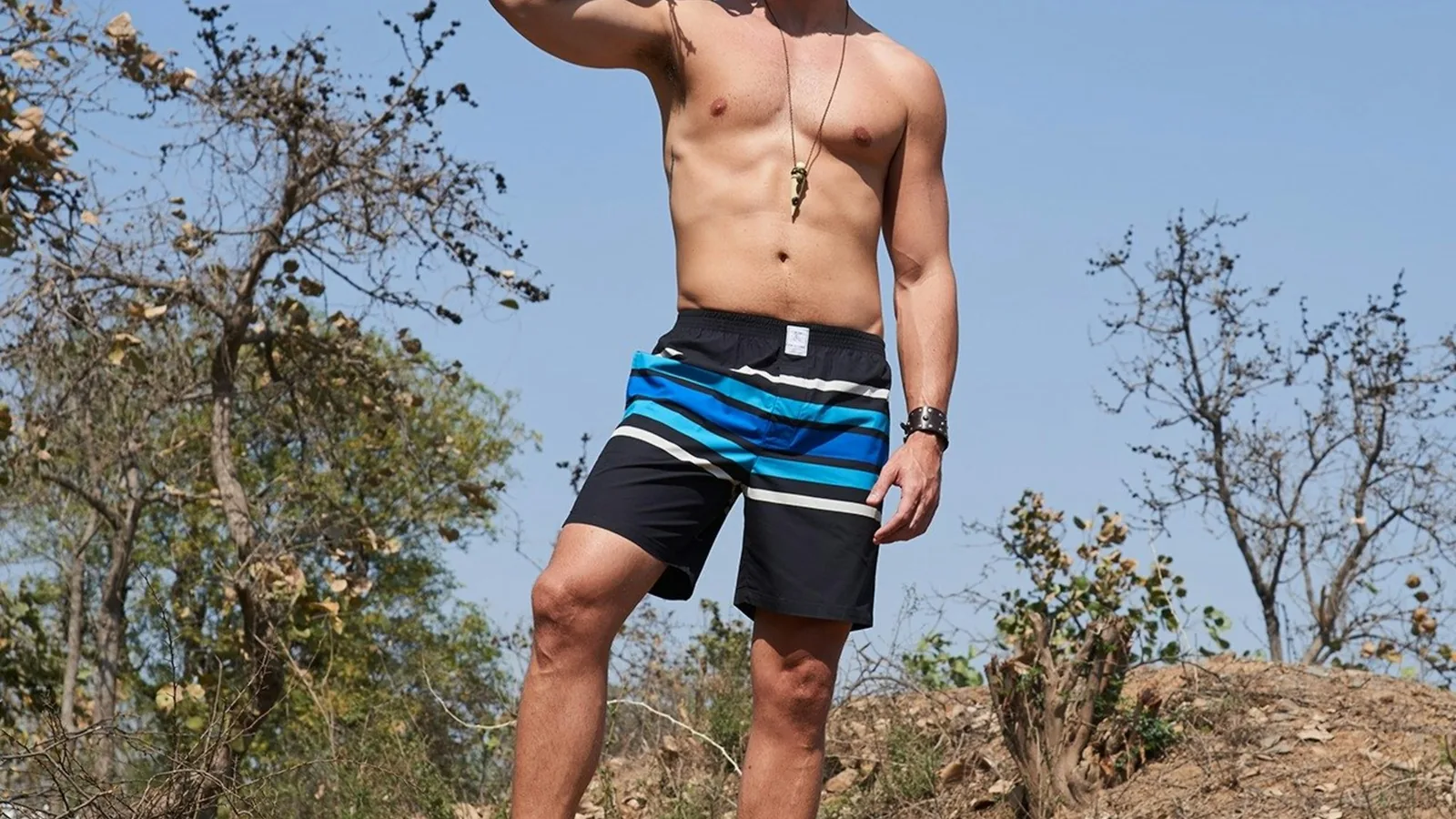
Compare tailored, denim, gym, running, compression, and swim shorts by fit, material, waistband, liner, pocket, and use.
Shorts are defined by more than inseam length. Rise, leg shape, waistband, liner, pocket system, material, hem, and intended activity determine whether a product behaves like tailored shorts, running gear, swimwear, workwear, or loungewear. A good brief identifies the use first and then makes each construction choice support it.
Organize shorts into useful product families
Tailored shorts use trouser-like waistbands, flies, shaped pockets, and controlled pressing. Chino and casual woven shorts simplify that language for everyday use. Denim shorts bring five-pocket construction and wash development. Cargo and utility shorts emphasize storage and durability. Athletic shorts prioritize movement and moisture management. Cycling or compression shorts use close stretch fits. Boardshorts and swim shorts address water use, while lounge shorts focus on softness and easy waist treatments.
| Family | Typical material | Key construction | Main fit check |
|---|---|---|---|
| Tailored or chino | Twill or suiting | Waistband, fly, slant or welt pockets | Seat balance and clean pocket openings |
| Denim | Rigid or stretch denim | Five-pocket details and wash | Rise, thigh ease, hem after finishing |
| Running | Light woven or knit | Movement split, secure pocket, liner option | Stride and waistband stability |
| Gym or basketball | Mesh, jersey, interlock | Elastic waist and mobile leg | Rise, hem sweep, pocket bounce |
| Cycling or compression | Recovery stretch knit | Body-mapped panels and stretch seams | Opacity, grip, seam comfort |
| Swim or board | Water-suitable woven or knit | Secure waist, drainage, lining decision | Wet comfort and closure security |
Specify rise, inseam, and leg opening together
Inseam is measured from the crotch seam to hem, but the worn length also depends on rise, crotch shape, hip ease, and garment angle. Record outseam and side seam as well as inseam. A curved running hem can be shorter at the side than the front or back. A cuff consumes length and adds weight.
Short, mid-thigh, above-knee, and knee-length are merchandising descriptions rather than production measurements. Fit the sample with the intended activity and footwear. Check standing coverage, seated coverage, stride, stairs, squatting, and whether the inner leg rides upward.
Leg opening controls both silhouette and movement. A narrow opening may suit a slim tailored style but restrict a deep lunge. Wide openings improve mobility but may need a liner or gusset for coverage. Side splits, curved hems, stretch inserts, or shaped panels can add movement without increasing the whole leg.
Build the waistband for stability
Tailored waistbands use shaped or straight bands, interfacing, belt loops, flies, and top closures. Athletic and lounge products commonly use encased, exposed, channel-stitched, or knitted elastic. Some combine elastic with an internal or external drawcord. Hybrid styles use a fixed front and elasticated back.
For elastic waists, define relaxed circumference, maximum extension, recovery, width, softness, join, and attachment. Test whether the waistband stays level with pockets loaded and during movement. Drawcord length, exit, tip, and attachment should be specified; an anchored cord is less likely to disappear into the channel.
Decide whether the product needs a liner or gusset
A liner can provide coverage, support, pocketing, or reduced friction, but it adds heat, seams, material, and fit variables. Running shorts may use a brief or boxer-style liner. Two-in-one gym shorts pair a loose outer shell with a fitted inner short. Swim products may use mesh or knit liners depending on the design.
Specify liner length, material, stretch, recovery, seam method, leg finish, gusset, and attachment to the shell. A phone pocket on the liner needs enough recovery to control movement without excessive pressure. Gussets can improve mobility by redistributing seams, but their grain and stretch direction must match the motion.
Design pockets around the activity
Casual shorts can use slant, side-seam, welt, patch, or cargo pockets. Athletic shorts may need a zipped key pocket, liner phone pocket, or low-bounce waistband pocket. State what each pocket holds and test it with that object. A deep pocket is not automatically secure if its opening angle allows contents to escape.
Light shells can sag under heavy pocket bags. Mesh may need binding. Water-use pockets may require drainage. Zipper pulls should not strike the body during running, and internal pocket components should not create abrasion.
Match material and finish to use
Woven twills and canvas support structured casual and utility shapes. Denim introduces wash and shrinkage considerations. Lightweight nylon or polyester wovens suit mobile shells. Mesh and jersey create breathable casual or team styles. Stretch interlock and jersey support compression fits when recovery and opacity are appropriate.
Evaluate drape, stretch, recovery, opacity, pilling, snagging, seam strength, shrinkage, colorfastness, and care. If quick-dry, UV, water resistance, or other performance language will be used, define the relevant test and approved result for the final material and garment. Do not transfer a fabric claim automatically to the finished product.
Approve shorts through fit and movement
Review grading at both ends of the size range. Inseam length, rise, pocket opening, liner length, elastic width, and side-split depth may need different rules rather than uniform scaling. The largest size should retain movement and pocket access; the smallest should not inherit oversized trims, drawcords, or openings. Document intentional fixed dimensions separately from graded ones.
- Measure waist, rise, hip, thigh, inseam, outseam, and leg opening.
- Test walking, sitting, stairs, squatting, and the intended sport motion.
- Load pockets and check waistband stability, bounce, and access.
- Review liner coverage, seam comfort, opacity, and leg movement.
- Wash the full sample and recheck dimensions, elastic, color, and finish.
For further planning, explore custom shorts manufacturing, gym shorts development, mesh shorts production, the fabric guide, and the quality process.