
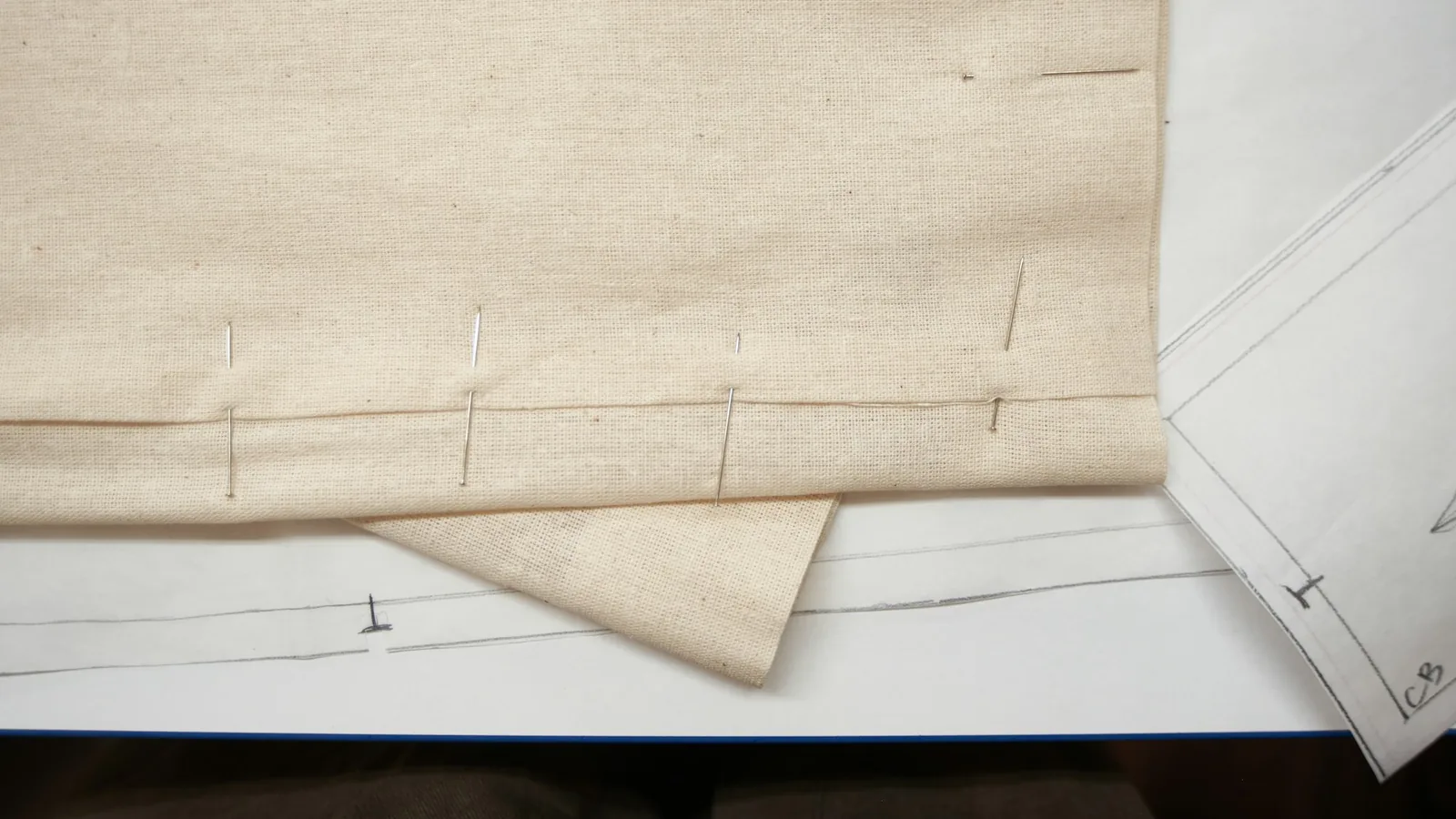
Compare patch, seam, welt, cargo, and specialist pockets, then define openings, bags, load, reinforcement, and placement.
A pocket is a small product inside a larger one. It has an opening, a storage area, a load, an attachment method, and a relationship with the wearer's movement. Styling a pocket without defining those elements can result in a detail that looks right in a drawing but gaps, tears, shows through, or cannot hold the intended object.
Define what the pocket must hold
Begin with purpose. Is the pocket decorative, intended for hands, designed for a phone, meant to secure keys, or required for a tool? Identify the object dimensions and orientation. Then place the pocket on a body or garment mock-up to test reach, comfort, and interference with sitting, bending, or carrying a bag.
Opening size is different from bag capacity. A large bag behind a narrow opening may be difficult to use. A generous opening can gape or allow contents to fall. Closure type, garment angle, and fabric friction also affect security.
| Type | How it is built | Useful for | Main watch point |
|---|---|---|---|
| Patch pocket | Separate piece applied to garment surface | Shirts, jackets, workwear, casual pants | Corner reinforcement and shape |
| Side-seam pocket | Opening concealed in a seam | Dresses, skirts, relaxed pants | Bag support and opening distortion |
| Slant pocket | Angled front opening with internal bag | Trousers and shorts | Gape across the hip |
| Welt pocket | Cut opening finished with one or two welts | Tailoring and refined outerwear | Accurate corners and reinforcement |
| Jetted pocket | Narrow lips around a cut opening | Formal trousers and jackets | Flatness and alignment |
| Bellows or cargo pocket | Added folds create expansion | Utility and equipment storage | Load control and bulk |
Use patch pockets for visible structure
Patch pockets can be square, rounded, pointed, curved, pleated, gusseted, or shaped into a design line. Specify finished dimensions, corner radius, turnback, top hem, topstitch distance, placement, and pattern matching. On stripes, checks, or prints, decide whether the pocket should match the body or create deliberate contrast.
Top corners experience concentrated force. Bar tacks, triangles, boxes, rivets, or internal reinforcement may be appropriate, but the method must suit the fabric. Heavy reinforcement can damage a light cloth. Curved pockets require controlled pressing or guides to keep the pair symmetrical.
Plan inset pockets around garment structure
Welt, jetted, and bound pockets cut through the garment surface. They need stable marking, accurate corners, appropriate reinforcement, and enough internal space for the bag. Their placement must account for darts, seams, fusing, insulation, and linings.
A zip pocket adds hardware, zipper tape, puller clearance, and an operation sequence. Concealed zippers may look clean but must still be reachable. Flaps can cover an opening or be decorative; the specification should state which. Button and snap closures need enough reinforcement to resist repeated pulling.
Engineer the pocket bag and its support
Pocketing material should be strong enough for the load without creating visible bulk. It may be self-fabric, lightweight woven pocketing, mesh, lining, fleece, or another compatible material. Color, shrinkage, dye transfer, and care behavior should suit the shell.
Map the bag outline and attachment points. A floating bag can twist or appear below a hem; a bag anchored too tightly can pull the garment. Tailored front pockets may be stayed to the waist. Jacket pockets can be caught into facings or seams. Reversible garments need a solution that works from both sides.
Questions for the pocket bag drawing
- What is the finished depth and width?
- Does the bag have one piece, two pieces, or a facing?
- Where is it anchored to prevent sagging?
- Can the contents touch the body or another component?
- Will the bag remain hidden during normal movement?
Adapt pockets for sport, workwear, and accessories
Sports pockets may use stretch mesh, bonded openings, waterproof-resistant zippers, or body-hugging placement to reduce bounce. Performance should be tested with the actual object and activity. A phone pocket that works while walking may move uncomfortably while running.
Workwear pockets need a clear tool map, reinforcement, access with gloves where relevant, and an understanding of occupational hazards. Fashion styling is not proof that a pocket meets a safety standard. Bag and backpack pockets introduce lining, foam, binding, and load distribution; their specifications should identify volume and attachment to the main structure.
Test pockets on the worn sample
Place the intended objects inside and use the garment through sitting, walking, bending, and reaching. Check access, security, bounce, pressure, garment drag, edge roll, opening gape, zipper operation, and whether contents show through. Repeat after laundering because shrinkage can distort openings and pocket bags differently.
Quality review should compare left and right placement, dimensions, angles, topstitching, corner shape, reinforcement, pattern matching, and interior finishing. A template can improve consistency, but it must be validated against the approved pattern and seam allowances.
Write a complete pocket specification
Pocket grading needs an explicit rule. A phone pocket may need to remain the same functional size across several garment sizes, while its placement shifts to stay balanced on the body. Other pockets may grow slightly with the garment. Review the smallest and largest sizes for hand access, object capacity, visual proportion, and distance from nearby seams rather than allowing automatic pattern scaling to decide.
Include a numbered pocket map, detailed drawings, finished opening and bag dimensions, materials, reinforcement, closure and hardware, stitch and topstitch notes, placement measurements, intended contents, and test expectations. If multiple sizes use the same object, confirm whether the pocket remains constant or changes with grading.
Related resources include custom cut-and-sew development, the workwear manufacturing guide, custom backpack development, and the garment quality process.