
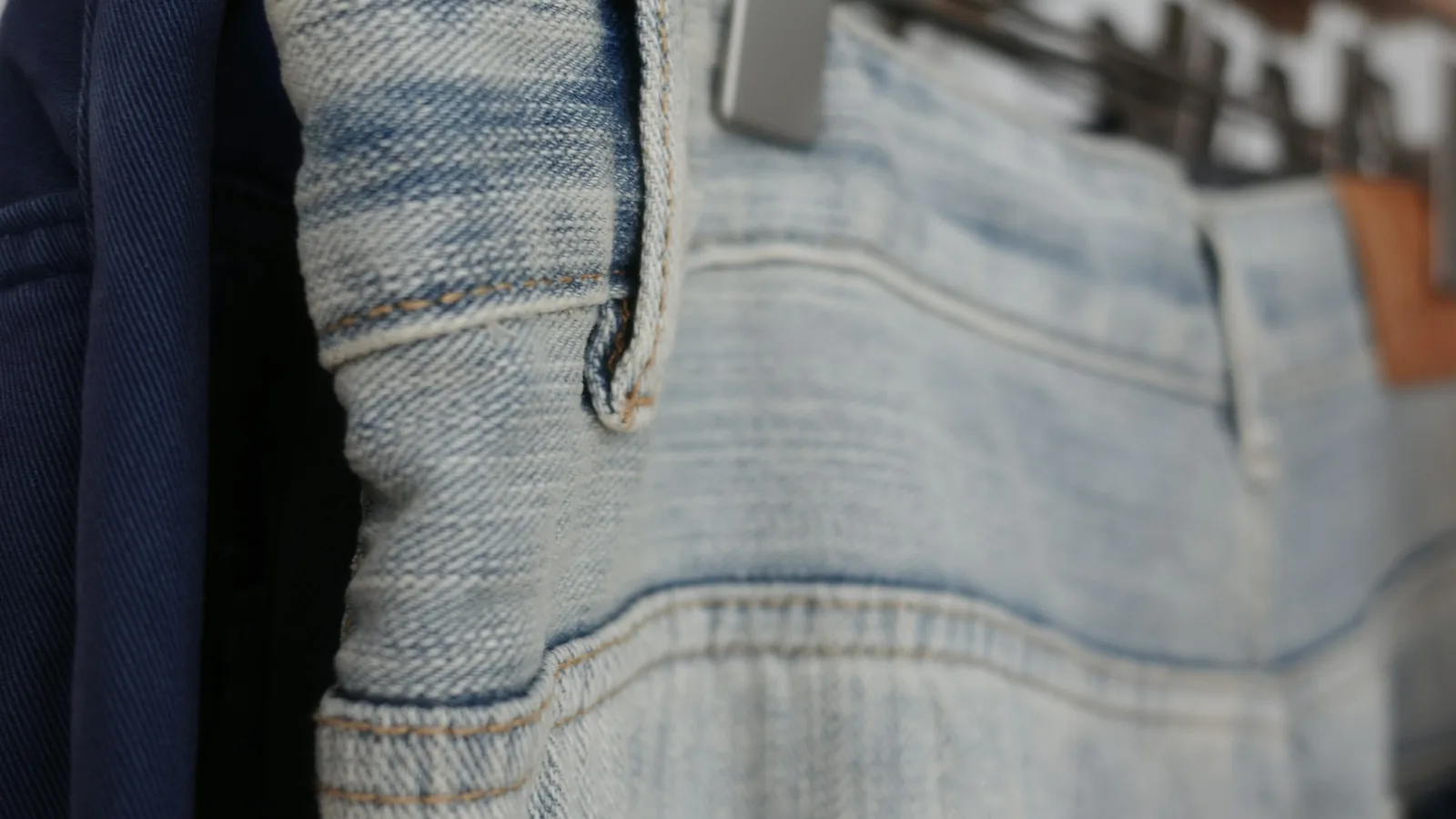
Compare denim fibers, weights, weaves, stretch, recovery, color, and washing to specify the right jeans material for a product.
Jeans begin with denim, but "denim" does not identify one material. Fiber blend, yarn, weave, weight, stretch, color, and finishing can produce anything from a rigid workwear jean to a soft, close-fitting style. A useful material brief connects those variables to the intended fit, wash, price position, care routine, and customer rather than asking for a generic premium denim.
What makes a material denim?
Classic denim is a yarn-dyed twill in which the face is dominated by colored warp yarns and the reverse shows more of the lighter weft. Indigo-dyed warp is traditional, but black, gray, colored, ecru, and overdyed denims expand the category. Twill direction and yarn character influence the diagonal surface, drape, and way the fabric develops with wear and washing.
Not every jean-like fabric is woven denim. Knit "denim look" materials, printed imitations, and lightweight chambrays can reproduce color cues without the same structure. Identify the actual construction in the specification so sampling, shrinkage, sewing, and care decisions match the material being used.
Compare denim fibers and blends
Cotton-rich denim
Cotton is the familiar base for many denims. Rigid 100% cotton styles can create a structured silhouette and develop distinctive wear, but their comfort depends on fit, yarn, weave, and finishing. Cotton-rich blends may add another fiber to alter softness, strength, recovery, drying behavior, or cost. The percentage alone does not describe how the fabric will perform.
Stretch components
Elastane or another elastic component can provide mechanical give and support close fits. Small percentages can have a noticeable effect because yarn placement and fabric construction matter. Polyester or other fibers may be combined with stretch systems to support recovery. A fabric that stretches easily but does not recover can bag at knees, seat, and waistband.
Cellulosic and recycled inputs
Lyocell, viscose, or similar regenerated cellulosic fibers may be used to soften hand and increase drape. Recycled cotton or polyester can be incorporated where an appropriate supply exists, but recycled content, traceability, and performance claims should be documented rather than inferred from a fabric name. The final fiber percentages must match approved labeling information.
| Direction | Likely character | Suitable starting point | Development watch point |
|---|---|---|---|
| Rigid cotton | Structured, low stretch | Straight, relaxed, workwear-inspired fits | Fit ease and shrinkage |
| Comfort stretch | Moderate give | Everyday slim or shaped fits | Growth after wear |
| High stretch | Close fit and mobility | Skinny or contoured styles | Recovery, seam strain, heat sensitivity |
| Drapey denim | Softer fall and surface | Wide-leg, fluid, or fashion silhouettes | Pocket support and seam impression |
| Heavy denim | Firm body and pronounced wear | Heritage and outerwear-led products | Bulk at seams and hardware |
Use weight and weave to support the silhouette
Denim weight is commonly discussed in ounces per square yard or grams per square meter. Numbers help compare samples, but they do not replace hand evaluation. Yarn size, density, finish, and fiber affect whether two fabrics at a similar weight feel crisp, compact, soft, or loose.
Lighter denims can support shirts, dresses, warm-weather jeans, and fluid shapes. Midweight options cover many everyday five-pocket products. Heavy denims bring structure and abrasion resistance but increase seam bulk, break-in time, needle demand, shipping weight, and the risk of thick intersections at belt loops and waistbands.
Right-hand, left-hand, and broken twills differ in surface and torque behavior. Plain-weave chambray is lighter and does not have the same diagonal face. Ask the supplier to identify weave, usable width, roll shade, skew, and known shrinkage rather than choosing from appearance alone.
Specify stretch, recovery, and growth
Stretch should be discussed in the direction that matters. Weft stretch supports movement around the body; bi-stretch materials add warp-direction give. Record the test method, force, extension, and recovery interval when comparing options. Informal hand pulling is not enough to predict a fitted garment.
Growth describes the fabric remaining enlarged after wear or loading. It can cause knees, seat, and waist to lose shape even when initial stretch feels comfortable. Evaluate fabric data and conduct a wear trial on the approved sample. Pattern dimensions for rigid denim should not simply be reused for a high-stretch fabric because balance, seam load, and ease will change.
Plan color and finishing before approving the base fabric
Raw or rinsed denim preserves a darker, cleaner surface. Enzyme, stone-inspired, bleach, resin, tint, abrasion, whisker, laser, and garment-dye effects can create different appearances, but each must be assessed for consistency, strength, hand feel, and environmental or worker requirements. A wash recipe should be tied to an approved physical standard.
Placement effects need a garment map. Abrasion that looks natural on one fit may sit incorrectly on another. Panels, pockets, belt loops, and seams can react differently because of thickness and grain direction. Approve shade range and acceptable variation, especially where indigo and garment processes are expected to evolve.
Turn the material choice into a denim specification
Before bulk cutting, compare roll headers and representative swatches from the delivered lot with the approved standard. Denim shade can vary within and between rolls, and wash processing can amplify small differences. A cutting plan may need shade grouping so panels from visibly different lots are not mixed in one garment. Record the roll identity through cutting and washing when traceability is important to troubleshooting.
- Record fiber content, weave, weight, usable width, color, and supplier reference.
- State stretch and recovery requirements plus the agreed test method.
- Define shrinkage, skew, shade tolerance, and pre-production wash approval.
- Connect the fabric to the exact fit block, seam construction, thread, and hardware.
- Approve care and fiber wording for the destination market. The US Federal Trade Commission provides an authoritative textile labeling guide for products sold in the United States.
For product planning, visit custom jeans development, compare choices in the fabric sourcing guide, understand options for garment washing and finishing, and review the quality approval process.