
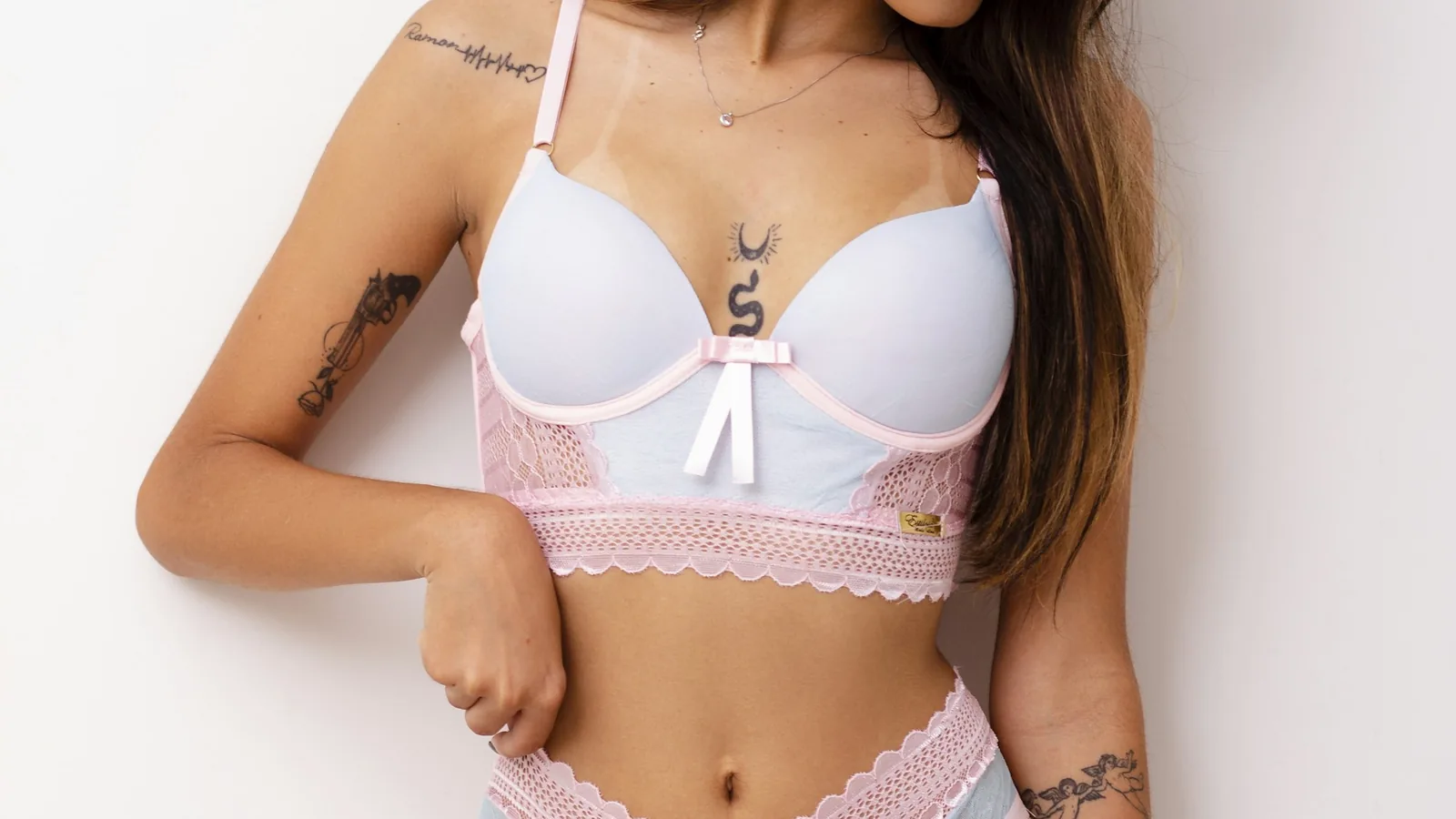
Compare common bra types by construction, support, coverage, materials, sizing, movement, care, and product-specific testing.
Bra types are defined by more than cup shape. Support level, coverage, neckline, wire or wire-free construction, underband, straps, closure, materials, size system, and intended use work together. The same style name can fit differently across brands because patterns and grading are not standardized globally.
For product development, choose a type around the wearer, outfit, activity, and fit objective, then verify it through physical samples across representative sizes. This guide describes common categories without treating any one design as universally suitable.
Understand the core bra components
- Cups: shaped through seams, molding, spacer material, stretch, or a combination.
- Frame and cradle: support the cups and may hold wires.
- Bridge or gore: connects the cups at center front.
- Underband and wings: wrap the torso and carry much of the support.
- Straps: stabilize and adjust fit but should not carry the entire load.
- Closure: hooks and eyes, front closure, pull-on construction, or another system.
- Elastics and linings: control edges, stretch, recovery, comfort, and opacity.
The custom bra guide helps connect these elements to material, customization, use, and a production brief.
Compare common everyday bra types
T-shirt bra
Designed for a smooth appearance under close clothing, this type often uses molded, spacer, or lightly padded cups with limited visible seams. Cup edge transition, shape consistency, heat-setting, foam recovery, and size grading are critical.
Seamed full-cup bra
Multiple cup panels create shape and support with greater coverage. Seam direction can lift, project, center, or control shape depending on the pattern. Fabric stability and seam comfort matter more than the number of panels alone.
Balconette or demi bra
A lower cup line and wider-set straps create an open neckline. Coverage and strap position vary by brand. Fit-test the cup edge and center front with the intended neckline and across sizes.
Plunge bra
A low center front supports deeper necklines. Wire shape, bridge height, cup containment, and neckline tension require careful balance. "Plunge" does not determine padding or support level.
Wire-free bra
Support comes from pattern shape, cup or lining structure, underband, elastic, and material recovery rather than a wire. It can range from light bralette construction to a highly engineered full-support style.
Bralette
Often light, flexible, and wire-free, a bralette may use stretch lace, jersey, rib, mesh, or soft elastic. Some are sized by simple alpha ranges; others use more specific cup and band options. Coverage, recovery, seam softness, and strap adjustment should match the intended use.
Compare special-purpose bra types
| Type | Primary design objective | Development focus |
|---|---|---|
| Sports bra | Manage movement for a defined activity and support level | Encapsulation or compression, underband, straps, chafe, heat, recovery |
| Strapless bra | Remain stable without shoulder straps | Band fit, grip, frame, cup edge, wire, size-specific support |
| Multiway bra | Adapt strap positions for different clothing | Anchor strength, strap length, hardware, stability in every approved configuration |
| Longline bra | Extend the underband farther down the torso | Boning or support, waist movement, rolling, closure length |
| Nursing bra | Provide practical cup access during nursing | One-hand hardware, support while open, skin contact, size change, safety |
| Post-surgical or adaptive bra | Meet a defined accessibility or recovery need | Qualified user input, closures, seams, pressure, pocketing, claim boundaries |
Products associated with health, recovery, or medical use require qualified specialist input and market-specific compliance. Do not infer a therapeutic benefit from a closure or fabric choice.
Choose materials by zone
A bra can combine stable cup lining, stretch wings, soft edge elastic, rigid or stretch lace, spacer, mesh, foam, wire casing, straps, and closures. Each zone needs a defined extension and recovery behavior. If adjoining materials stretch differently, seams can cut in, gape, or distort.
Assess composition, structure, weight, stretch by direction, recovery, opacity, abrasion, pilling, colorfastness, perspiration response, skin feel, and care. The fabric guide provides a general comparison framework, while the lingerie guide addresses close-to-body product choices.
Control elastics and components
Specify elastic width, plush side, extension, recovery, color, attachment tension, and placement. Approve hooks and eyes, rings, sliders, wires, boning, channeling, cups, and strap material by size where needed. A component that works in the base size may not scale appropriately across the range.
Develop a clear size and fit system
Band and cup labels are not consistent across brands or countries. Define the measurement and fitting logic used by this product, then build patterns around a chosen base size and size range. Decide whether sister sizes share components and where cup, wire, strap, wing, closure, and elastic specifications change.
Fit on people representing key sizes and shapes within the target market. Check band level and pressure, cup containment, wire or cup position, bridge, neckline, underarm, strap placement, closure, movement, and comfort over time. A fitting should include reaching, bending, sitting, and the intended activity.
Publish garment or body guidance honestly and explain that fit can vary by style. Avoid promising one universal size conversion.
Develop sports bras by impact and method
Sports bras may use compression, separate encapsulating cups, or a hybrid. Design around a named activity and intended support level, then test movement, comfort, heat, coverage, and recovery. Strap and underband configuration, cup shape, neckline, and material all contribute.
The sports-bra guide offers a focused route for training-specific styles. Claims about impact reduction or support should be based on an appropriate method and the actual size range, not a visual impression.
Sample, test, and review care
- Approve all zone materials, elastics, cups, wires, and hardware together.
- Fit the first sample and record band, cup, strap, and component changes precisely.
- Validate representative sizes, not only the base size.
- Wear-test for several hours and through intended movement.
- Launder repeatedly and inspect recovery, color, foam, wire, elastic, and hardware.
- Check seams, sharp points, attachment strength, labels, and skin contact.
Choose additional tests around the product: stretch and recovery, colorfastness to perspiration and washing, bursting strength, pilling, strap or closure cycling, wire or component durability, and dimensional stability may be relevant.
Write a complete bra brief
Include the wearer, occasion or activity, bra type, support and coverage objective, size system and range, cup and frame construction, wire or wire-free direction, zone materials, elastic, straps, closure, components, color, decoration, care, testing, quantity, and destination market.
A type name communicates the outline of an idea. A successful bra requires a size-aware pattern, controlled materials, safe components, repeated fitting, and evidence that the finished product performs as described.