
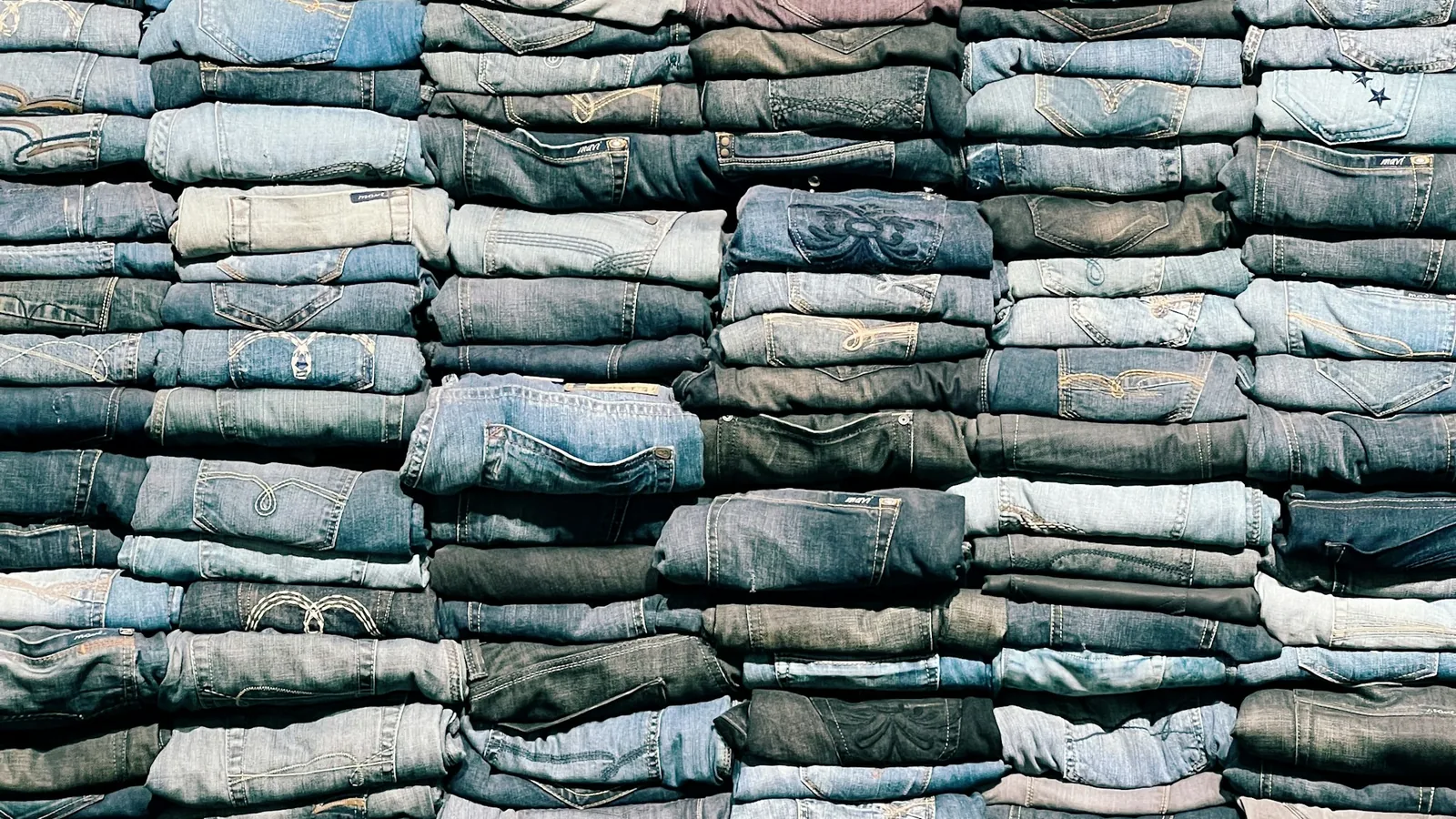
Evaluate jeans production through denim specifications, post-wash fit, construction, hardware, laundry control, pilot runs, and reorders.
Jeans sourcing is a material, fit, construction, wash, and process-control project. The same base denim can become very different products after pattern, sewing, laundry, abrasion, and finishing. Instead of ranking manufacturers by unsupported claims, compare their ability to document shrinkage, engineer the fit, control wash standards, manage hardware, and repeat the approved appearance across production.
Define the jeans fit and aesthetic
State customer, rise, waist position, seat, thigh, knee, leg shape, inseam, hem, and intended break. Identify rigid, comfort-stretch, or higher-stretch direction and the expected feel after laundry. Add pocket shape, yoke, fly, waistband, belt loops, stitching, hardware, patch, and branding.
Use front, back, and internal technical drawings plus a measurement chart. Fit names such as straight, relaxed, baggy, slim, and bootcut need actual dimensions. Review the custom jeans page before approaching suppliers with only a vintage reference image.
Evaluate denim and shrinkage control
Request composition, weave, weight, usable width, stretch and recovery, sanforization or other dimensional treatment, shrinkage, skew, colorfastness, shade, and care. Ask how the supplier identifies rolls and shade lots. For stretch denim, review growth after wear as well as recovery after care.
Pattern dimensions must account for the nominated wash and fabric behavior. Clarify whether sample and bulk use the same fabric lot and laundry recipe. If fabric changes, refit and retest rather than assuming equivalent weight and fiber content produce the same garment.
Inspect jeans construction and hardware
Review seam and stitch type, thread, stitch density, reinforcement, pocket setting, fly, waistband, yoke, belt loops, bar tacks, rivets, buttons, zipper, patch, and label attachment. Check symmetry and alignment before and after wash. Heavy intersections need suitable machinery and clean handling.
- Does the fly lie flat and operate smoothly?
- Are pockets symmetrical and functional on the body?
- Do belt loops and stress points have consistent reinforcement?
- Does waistband shape follow the approved fit?
- Are metal finishes, logos, and attachment backs approved?
Ask for hardware specifications and test evidence appropriate to the product and destination. Unauthorized component substitution can change appearance, function, and compliance.
Control wash and finish standards
Define wash target with physical standards, recipe or process record where appropriate, placement maps, and an acceptable variation range. Digital images cannot capture hand, cast, contrast, or surface damage reliably. Keep several signed garments when intentional variation is part of the look.
Review shade, abrasion, whiskers, grinding, tint, coating, hand, odor, staining, and measurement change. Confirm how laundry lots are separated and how the first bulk output is approved. The capabilities overview can help place finishing approvals within the full production flow.
Fit jeans after the final process
Measure and fit the garment after its nominated wash. Test standing, sitting, walking, stairs, deep bend, pocket use, and repeated wear. Review waist gaping or pressure, rise, seat, thigh, knee position, leg balance, inseam twist, and hem.
Fit key sizes and verify the grade. Pocket and back-rise proportion may need adjustments across sizes. For stretch styles, record measurements before wear, after a timed wear test, and after recovery. Tie corrections to points of measure and pattern areas.
Compare jeans supplier processes
| Capability | Evidence to request | Risk if unclear |
|---|---|---|
| Denim sourcing | Article specification, lot control, test data | Shade, shrinkage, or recovery inconsistency |
| Pattern and fit | Measured samples, revision history, grade review | Post-wash fit drift |
| Laundry | Physical standard, process control, bulk approval plan | Unrepeatable shade or damage |
| Hardware | Approved components and substitution control | Failure, mismatch, or compliance issues |
| Quality | In-line and final checkpoints | Problems discovered after finishing |
Use the quality framework to inspect material, measurements, laundry, construction, hardware, appearance, labeling, and packing.
Approve jeans with a pilot run
Plan bulk laundry control
Set approval gates before and after laundry. Before wash, inspect cut direction, shade lots, sewing measurements, hardware attachment, thread, and construction. Approve the first laundry load against signed standards before releasing the remaining lots. Measure several garments from different positions in the load because temperature, chemistry, mechanical action, and load size can create variation.
Define an acceptable visual range for shade, cast, abrasion, whisker placement, hand, and surface damage. Train inspectors with approved examples at the center and limits of that range. Separate units outside it rather than blending them into packing. Track results by fabric roll, sewing bundle, and wash lot so a problem can be traced and contained.
After finishing, check hardware operation, zipper, rivets, bar tacks, seam damage, labels, odor, staining, and measurements. Pack only after the garment is fully conditioned. For reorders, compare the new raw denim and trial wash with retained standards; do not assume the previous recipe produces the same result on a new material lot.
Review packing for crocking and abrasion. Dark or heavily processed denim can transfer color to light labels, pocketing, tissue, or neighboring garments if insufficiently controlled. Approve folding so hardware does not mark another panel. Record carton moisture and conditioning requirements appropriate to the route, and inspect goods promptly after arrival rather than leaving a potential problem sealed. Log findings by wash lot.
Complex washes or new fits benefit from a controlled pilot before full volume. Confirm sample route and bulk route are the same, then measure variation across several units. Review the proposed ordering sequence, commercial terms, minimums by wash, timing, testing, and change control.
When denim, fit, wash, hardware, size range, and quantity are defined, share the jeans brief. Choose the partner whose evidence shows control from raw denim through finished garment, not the one with the strongest ranking language.
Supplier capabilities, ownership, minimums, locations, and commercial terms change. Treat any comparison as a starting point and verify current details directly before making a purchasing decision.