
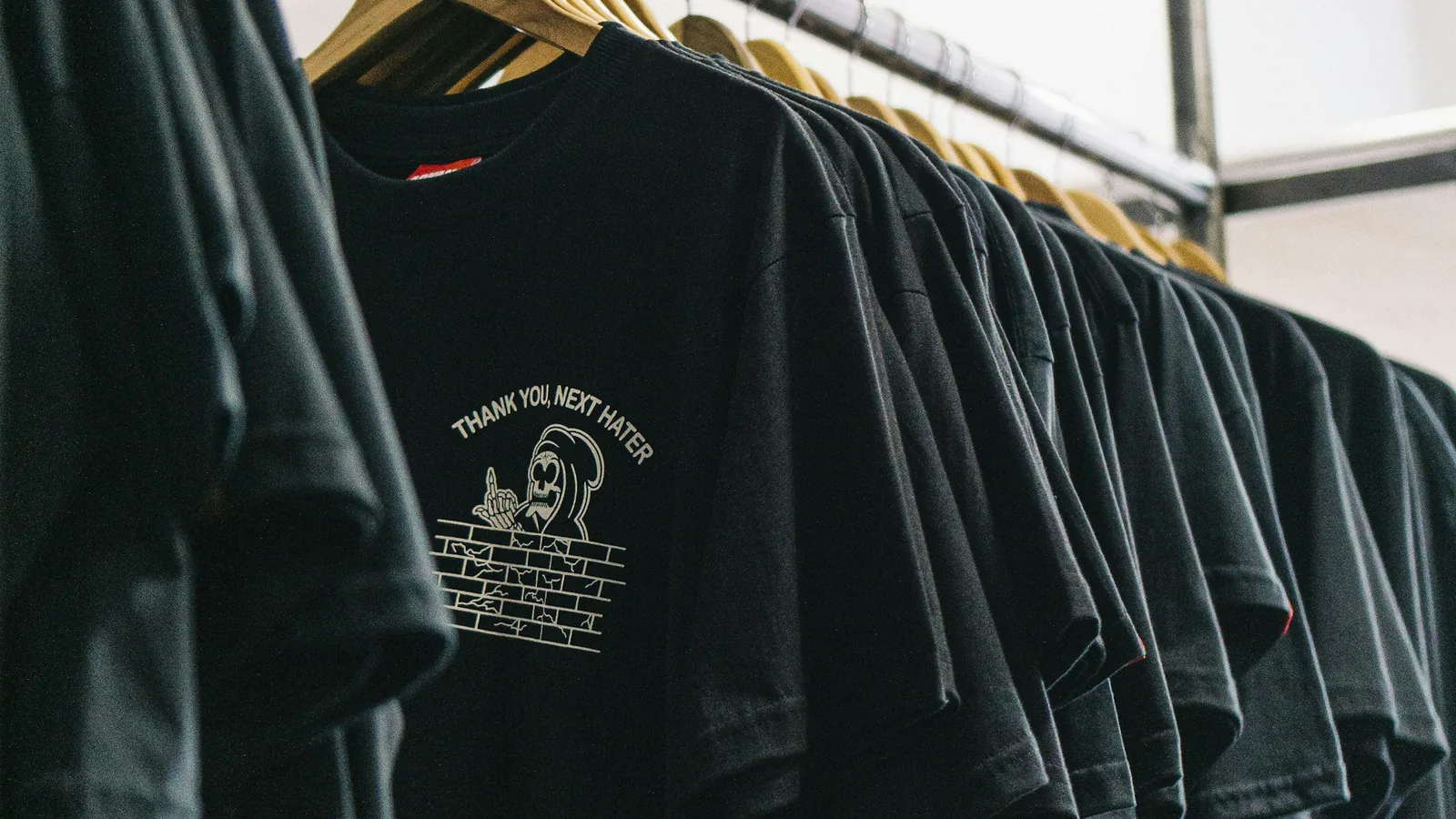
Compare heavyweight T-shirt suppliers through jersey specifications, collar construction, washed fit, decoration, bulk lots, and cost.
A heavyweight T-shirt is not defined by a marketing adjective or one grams-per-square-metre figure. Fabric construction, usable width, yarn, finish, shrinkage, collar system, pattern, seam stability, and decoration determine whether the product feels substantial and remains balanced after care. Compare manufacturers through the same technical brief and physical tests.
Define what heavyweight means for the brand
Describe the use and silhouette first. A boxy streetwear tee, durable work top, premium retail basic, and oversized graphic shirt may all use substantial cloth but require different drape and structure. State target hand, opacity, season, fit, length, shoulder, sleeve, and neckline.
Give a target weight range if known, then add the behavior you need. Two fabrics at a similar weight can differ in compactness, surface, stretch, and recovery. The custom T-shirt guide provides a product-level checklist for fit, construction, branding, and finish.
Compare heavy-jersey specifications
Request composition, knit structure, yarn direction, target weight and tolerance, usable width, finish, shrinkage, spirality or skew, pilling, colorfastness, stretch, recovery, and recommended care. Review a full-width or large cutting, because a small swatch can hide drape and edge behavior.
Ask whether the sample article is standard bulk and how color affects weight or finish. Garment dye, pigment processes, washing, and brushing can change measurements, shade, and hand. If a finish is part of the design, approve the finished garment and its acceptable variation.
Engineer the collar and seams
A substantial body needs a coordinated neckline. Specify rib structure, composition, width, finished height, stretch, recovery, color, and attachment. Review neck opening, rib length, seam bulk, topstitching, and back-neck support. An overly stiff collar can feel restrictive; an underpowered rib can wave or grow.
Control shoulder, armhole, side seam, sleeve hem, and body hem construction. Heavy jersey can create thick intersections and visible feed problems. Ask how the sample room selects needle, thread, seam, stitch density, and pressing. Evaluate puckering, roping, twisting, skipped stitches, and needle damage.
Test fit, drape, and care
Measure the sample before care, fit it, wash it according to the proposed label, condition it, and measure again. Review chest, length, shoulder, sleeve, neckline, hem, and body twist. Wear it for several hours to assess heat, stiffness, abrasion, and how the cloth breaks over the body.
For oversized fits, fabric weight can pull the garment longer or make wide sleeves feel rigid. For closer fits, dense fabric may restrict movement despite nominal stretch. Test key sizes rather than relying on the base size. Record comments by point of measure and pattern area.
Build acceptance criteria through the quality process and retain the approved washed sample as well as the unwashed reference.
Approve decoration for dense fabric
A smooth compact surface can support crisp graphics, but ink, embroidery, applique, and heat treatments still need product-specific approval. Define artwork size, color, placement, coverage, hand, and acceptable variation. Make the actual design on the selected color.
Test print cure and wash durability without overheating the fabric. Review dense embroidery for stiffness and backing comfort. If the garment is dyed or washed after decoration, confirm process order and approve the final result. The capabilities overview helps identify separate approvals for fabric, artwork, labels, and finishing.
Compare consumption, quantity, and cost
Heavy fabric price is only one cost input. Usable width, shrinkage, marker efficiency, oversized pattern pieces, size range, directional surface, and loss influence consumption. Request the width and consumption assumptions behind each quote.
Confirm minimums by fabric article and color, sample charges, dye or finish minimums, balance material, price validity, lead time, packing, and commercial terms. Compare the same size and color matrix. A quote based on a narrower size range or lighter alternative is not equivalent.
Run a heavyweight-tee supplier trial
Control cutting and bulk lots
Dense jersey needs time to relax before measurement and cutting. Agree on relaxation conditions, lay height, grain and nap direction, defect marking, shade separation, and how cut panels are bundled. Inspect bulk width, weight, shade, surface, shrinkage, and skew against the approved article before the full marker is committed. A change in usable width can alter both consumption and finished balance.
Approve a graded size set in production fabric. Review neckline and rib on every selected size, because a grade that works at the chest can still produce a poor opening or collar proportion. Check artwork scale and placement on the smallest and largest pieces. During sewing, monitor feed at shoulders, armholes, collar, and hems so thick layers do not grow differently.
For reorders, retain a labeled fabric cutting, rib, thread, pattern revision, decorated sample, and washed measurements. Ask whether yarn, knitting, dyeing, or finish has changed. Repeat bulk-lot approval rather than relying only on the previous article number. Record wearer feedback about heat, stiffness, neckline, and dimensional change for the next revision.
Approve folding and carton quantity as well. Dense tees occupy more volume and can develop hard creases or print impressions when compressed. Inspect a packed sample after storage, then set tissue, separation, or fold instructions only where the product needs them.
Issue one controlled pack and ask each candidate to identify assumptions. Review fabric evidence first, then pay for a development sample. Consolidate measurements, fit, construction, decoration, care, and commercial findings into a scorecard. Compare the workflow with the ordering process before bulk approval.
When weight direction, fit, artwork, quantity, and testing are clear, share the heavyweight T-shirt brief. Supplier selection should rest on the repeatability of the approved tee, not a list position.
Supplier capabilities, ownership, minimums, locations, and commercial terms change. Treat any comparison as a starting point and verify current details directly before making a purchasing decision.