
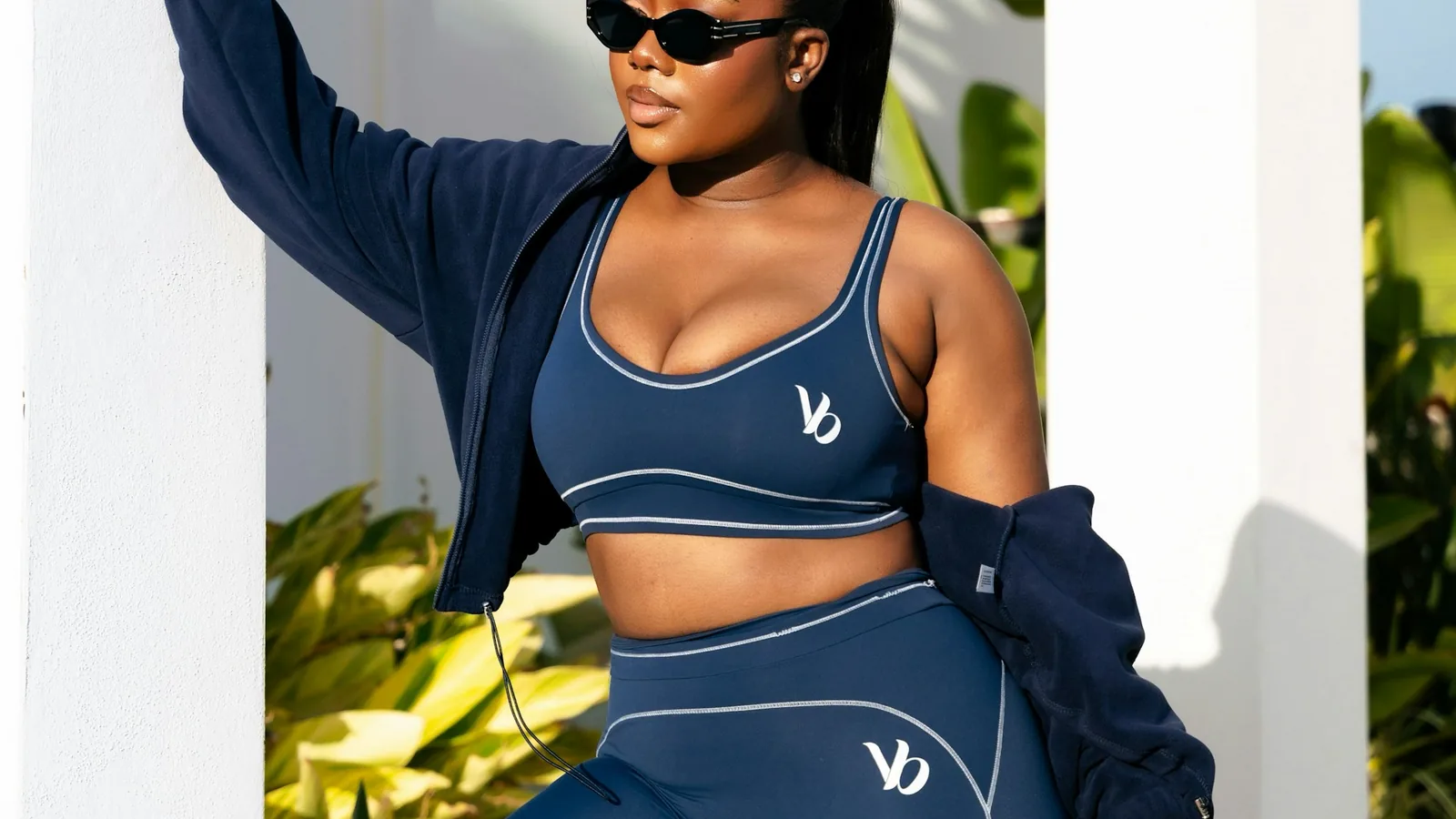
Explore durable sportswear trends in fit, storage, materials, versatility, branding, and testing,and turn each one into a product decision.
The most useful sportswear trends are not isolated colors or viral silhouettes. They are shifts in what customers expect a product to do: move comfortably in a specific activity, carry essentials without distraction, transition between settings, last through repeated care, and explain its performance without inflated claims.
For a brand, a trend should become a testable product decision. This guide examines durable directions in sportswear and the questions to ask before building them into a collection. Not every direction belongs in every product; relevance to the athlete and activity matters more than novelty.
Design for a specific use
Generic "activewear" is giving way to more precise use cases. A top for low-impact studio practice, a trail-running shell, a rugby jersey, and a strength-training short encounter different motion, climate, contact, storage, and durability demands. Product pages and development briefs become clearer when the activity is defined before the aesthetic.
Map the wearer's sequence: arrival, warm-up, peak effort, rest, travel, and care. Note where heat builds, where a bag or belt rubs, what the athlete carries, and which movements create strain or exposure. Use that map to set fit, fabric, panel, seam, and pocket priorities. The sportswear product guide provides a starting point for turning the activity into a manufacturing brief.
Build versatile product systems
Many customers want fewer pieces that work across a session and the rest of the day. Versatility does not mean making every product neutral. It means coordinating layers, fits, colors, and features so a capsule can adapt without unnecessary duplication.
- A base layer manages skin contact and movement.
- A mid layer adds warmth without blocking mobility.
- A shell responds to wind or light weather and packs away cleanly.
- Bottoms share pocket logic and color with more than one top.
Test pieces together. Waistbands should not compete, hems should overlap appropriately, and a jacket should fit over the intended mid layer. A coherent system can also reduce development risk by reusing proven components where they genuinely suit several styles.
Make storage part of the pattern
Pockets are moving from an afterthought to a defining product feature. Phones, keys, cards, gels, gloves, and small tools need stable locations that do not bounce, drag the garment, chafe, or become inaccessible in motion.
| Storage decision | Product question | Sample check |
|---|---|---|
| Side leg pocket | Will the opening and bag support the intended device? | Run, squat, and sit with the loaded pocket |
| Waistband pocket | Does it remain accessible without rolling the waist? | Check bounce, sweat exposure, and closure |
| Zipped jacket pocket | Can it be used with gloves or a pack strap? | Load it and inspect seam strain |
| Internal security pocket | Does it add bulk or show through the shell? | Wear with the actual contents |
Document pocket dimensions, placement from stable reference points, opening, reinforcement, closure, bag material, and load. A visual mockup is not enough.
Use materials with explainable performance
Customers increasingly encounter broad terms such as breathable, sweat-wicking, cooling, compression, four-way stretch, and weather resistant. A strong product team converts each term into a relevant material and garment requirement. "Breathable" might involve air permeability, moisture vapor transfer, vent placement, or simply a more open construction; these are not interchangeable.
Compare composition, knit or weave, weight, stretch, recovery, opacity, abrasion, pilling, drying, dimensional stability, and skin feel. Test color and performance after the planned care cycle. The fabric selection guide helps keep fiber, structure, finish, and evidence separate.
Material choice should also account for the whole garment. A high-recovery body fabric can be undermined by a weak pocket opening or incompatible thread. A coated shell can lose weather performance through untreated seams. Build claims only from evidence that applies to the exact final product.
Refine fit through movement
Sportswear fit is becoming more purposeful at both ends of the silhouette range. Close fits need secure coverage, recovery, and seam comfort. Relaxed training pieces need enough room for movement without catching equipment or obscuring the body position needed for coaching.
Run a movement protocol during sampling. Include the deepest flexion, extension, rotation, impact, or reach expected in the activity. Observe hem travel, waistband roll, strap shift, pocket movement, seam pressure, transparency, and excess fabric. Fit on more than one relevant body within the base size and repeat after washing.
Inclusive sizing requires more than extending a grade rule. Validate proportions, support, pocket access, strap length, rise, and panel placement across representative sizes. Record deliberate changes rather than assuming the same detail scales perfectly.
Reduce visual noise and place branding deliberately
Sportswear is making room for quieter branding, tonal graphics, integrated texture, and color blocking that follows the body or garment function. This direction can improve versatility, but restraint still demands precision. A small mark with poor placement or puckered embroidery looks less considered than a larger, well-developed graphic.
Select decoration around stretch, heat, surface, wash, and skin contact. A transfer placed across a high-extension zone needs different evaluation from a chest print on a stable top. Review available printing options, then sample the exact artwork size and color on the production fabric.
Prioritize durability and repairable details
Longer use is becoming part of product value. Design for repeated laundering, abrasion at predictable contact points, replaceable drawcords where practical, secure trims, and colors that can be reordered. Avoid decorative complexity that creates a weak point without serving the athlete.
Durability is not one universal score. A yoga legging, team jersey, and work-training hybrid experience different stresses. Set product-specific checks for seam strength, stretch recovery, pilling, abrasion, snagging, colorfastness, print adhesion, zip cycling, and dimensional stability. The quality guide explains how to connect those requirements to an approved sample and inspection plan.
Develop smaller, better-validated capsules
Digital sketches and 3D tools can speed communication, but a physical sample remains essential for hand, compression, opacity, motion, heat, and care. Use faster visualization to narrow choices, not to skip material and fit validation.
- Choose one athlete, activity, and use environment.
- Build a small system of complementary products.
- Define measurable fit, storage, material, and durability requirements.
- Test physical samples with the intended movements and loads.
- Launch a focused quantity and collect structured feedback.
- Improve the approved platform before multiplying styles.
Turn a trend into a product brief
For every trend under consideration, write the customer benefit, product change, proof method, cost effect, and possible downside. If "modular layering" creates three pieces customers cannot combine, or "technical" adds a finish with no defined use, the direction has not been resolved.
The strongest sportswear collections select a few relevant shifts and execute them deeply. Use the activewear development guide to organize the next brief around fit, materials, customization, and real use rather than a list of trend names.