
Build a focused print-on-demand clothing business with practical guidance on product testing, unit economics, fulfillment, service, and launch measurement.
Print on demand can be a sensible way to test a clothing idea because stock is produced after a customer orders. It does not remove the work of building a brand, however. The business still needs a specific customer, artwork people want to wear, dependable product quality, realistic margins, and a service process that protects the buyer when something goes wrong.
The strongest starting plan is deliberately narrow. One audience, one visual point of view, a small product set, and a clear promise are easier to test than a storefront filled with unrelated graphics. This guide maps the commercial and product decisions to make before spending heavily on ads or adding dozens of designs.
Choose a focused market and reason to buy
Begin with a group you understand well enough to describe without vague labels such as "everyone who likes fashion." A useful audience definition includes a shared interest or identity, the situations in which they wear the product, the price range they already accept, and the visual codes they recognize. A running club, a tightly defined music community, or professionals in one field gives you more useful creative constraints than "streetwear fans."
Then define why your version deserves attention. The answer might be unusually good illustration, local storytelling, a consistent sense of humor, limited artist collaborations, or fit and fabric choices that feel more considered than typical merchandise. Do not rely on scarcity language alone. A buyer needs to understand the product before a countdown can make it desirable.
- Write a one-sentence audience statement and a one-sentence product promise.
- Review competing products for price, garment type, print scale, fulfillment time, and customer complaints.
- Create a small visual system: type, color, illustration rules, photography direction, and tone of voice.
- Launch with three to six related designs rather than a large, disconnected catalog.
Select the right production model
Print on demand is one of several routes. It is useful for demand testing and a broad size range, but per-unit costs are usually higher and control over blanks, trims, packaging, and production timing may be limited. Compare it with a small inventory run before assuming it is automatically the lowest-risk option.
| Route | Best use | Main trade-off |
|---|---|---|
| Provider-managed POD | Fast validation with little stock | Less control and a higher unit cost |
| Local print-on-order | Hands-on quality checks and local delivery | More manual order coordination |
| Small decorated batch | Known demand and stronger presentation | Cash is committed before every piece sells |
| Custom manufactured product | Distinct fit, fabric, labels, and construction | Longer development and a larger planning burden |
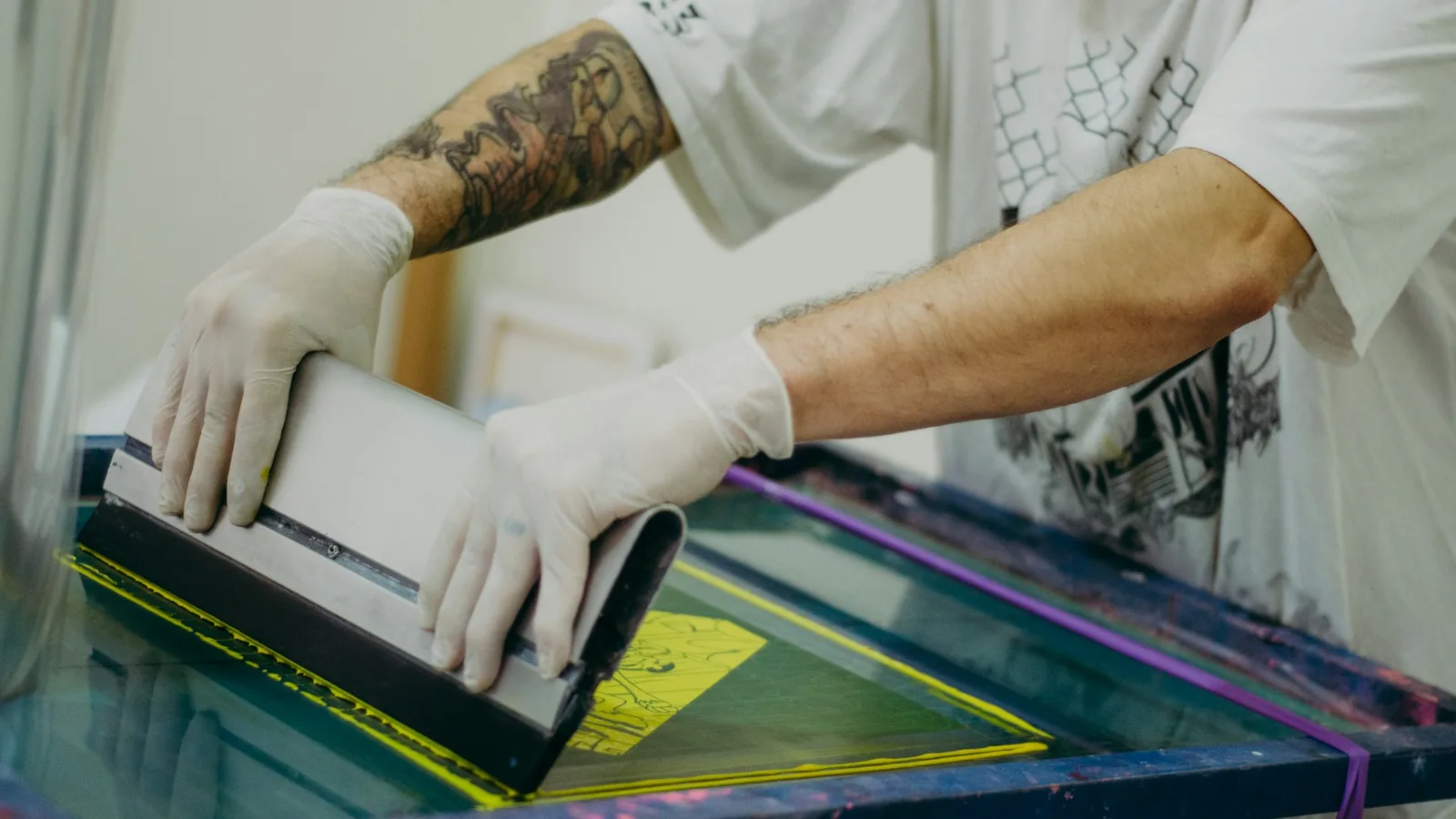
Study available garment printing methods before selecting a provider. A design with fine tonal detail, a large solid print, or a small one-color mark may need a different process. If the product succeeds and fit becomes part of the value, a dedicated custom T-shirt route can be evaluated later rather than promised at launch.
Build the unit economics before setting the price
A margin is not simply retail price minus the provider's base price. Build a contribution model for each product and destination. Include the blank, printing, provider fees, payment processing, packaging, shipping subsidy, returns or replacements, marketplace fees, and a realistic customer-acquisition allowance. Tax treatment depends on where the business and customer are located, so obtain market-specific accounting advice.
For example, a product that sells for 40 currency units and costs 20 to make does not have a 50 percent usable margin if another 4 goes to shipping support, 2 to transaction and platform fees, and 5 to acquiring the order. The remaining contribution is 9 before fixed costs and owner pay. Run the same calculation for discounts; a routine 20 percent promotion can erase most of that contribution.
- Model a full-price order, a discounted order, and a replacement order.
- Separate costs that rise per order from monthly software and creative costs.
- Check how shipping changes for a second item and for international zones.
- Set a minimum acceptable contribution before launching paid advertising.
Specify and test the product
Order physical samples of every garment, color, and print combination you plan to feature prominently. A digital mockup cannot show fabric opacity, collar shape, print hand, color shift, placement, or how a graphic behaves after washing. Use the sample to create honest photography and a useful size guide.
Record the exact blank style, fiber content, garment measurements, print method, print dimensions, placement reference, artwork file, color profile, and care information. Wash and wear the sample several times using the instructions you intend to give customers. Look for unexpected shrinkage, twist, cracking, color transfer, edge lifting, and discomfort. For sweatshirts or hoodies, compare weight, interior finish, hood construction, and rib recovery; the custom hoodie guide explains the decisions that matter if you later develop your own base garment.
Prepare production-ready artwork
Keep a master file for every design and export to the provider's documented requirements. Confirm printable area, resolution, transparency, color mode, minimum line weight, and whether underbase printing changes the result on dark garments. Avoid stretching a small raster image to fill a large chest area. Name versions clearly so a corrected file cannot be confused with the first upload.
Design the store and service around real expectations
A product page should answer what the garment is, how it fits, what the print feels like, how long production normally takes, where it ships from, and what happens when an item is damaged or the wrong size is ordered. Use photographs of the physical sample, not only generated mockups. State that an item is made after ordering when that affects cancellation or delivery.
Before launch, place test orders through the entire checkout flow. Review tax and shipping settings, order confirmation, provider synchronization, tracking messages, and the support inbox. Write response templates for a late parcel, a damaged print, an address change, and a size question, but leave room for a human answer.
- Publish clear production and delivery ranges without presenting estimates as guarantees.
- Create a measurement-based size guide for each base garment.
- Define who pays for a replacement in each common failure scenario.
- Keep customer emails and order records organized enough to spot repeated defects.
Launch, measure, and improve
Start with an audience you can reach directly through useful content, community participation, collaborations, an email list, or a small event. Paid ads amplify a clear offer; they rarely repair an unclear one. Measure product-page views, add-to-cart rate, checkout completion, contribution per order, refund reasons, repeat purchase, and support issues by garment and design.
Use evidence to decide the next move. Remove designs that attract clicks but not purchases. Improve pages that generate preventable size questions. Negotiate or change a provider when defects repeat. When a product has stable demand, compare POD economics with a small custom production run. The goal is not to graduate from POD at a fashionable moment; it is to choose the production model that best supports the customer experience and the business.
A practical launch checklist
- A defined audience, product promise, and coherent first collection
- Physical samples approved for garment, artwork, placement, and wash behavior
- Unit economics tested at full price, discount, and replacement scenarios
- Original product photography, accurate measurements, and clear care guidance
- Shipping, returns, privacy, and customer-support processes tested end to end
- A small launch channel, measurement plan, and rule for expanding the range
Print on demand works best as a disciplined testing system, not a shortcut around product work. Make fewer promises, inspect the physical result, and let customer behavior determine what deserves deeper investment.