
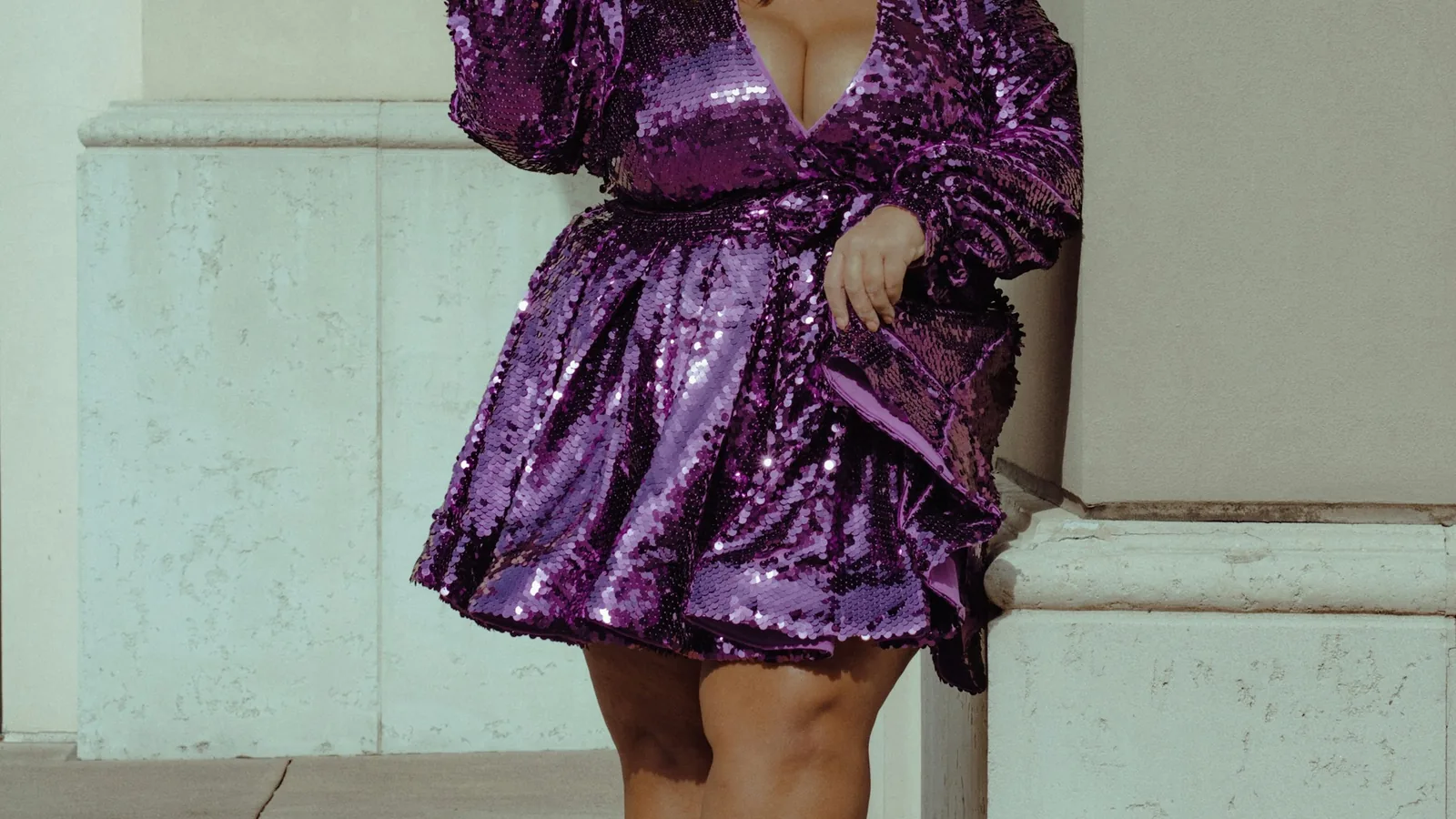
Create a plus-size clothing business with customer-led blocks, proportionate grading, multi-size testing, clear sizing, and sound inventory.
A plus-size clothing business should begin with a clear customer and a purpose-built fit system, not an adult block enlarged by a uniform percentage. Bodies change in proportion as well as circumference, and customers within the same labeled size can have different shapes, heights, mobility needs, and style preferences. Build the brand around specific use cases, fit evidence, transparent information, and an assortment the inventory model can support.
Choose a specific customer and problem
"Plus size" is not a complete audience definition. Decide which customer, occasion, aesthetic, climate, and price architecture the opening range serves. Workwear for long seated days, active clothing, occasion dresses, streetwear, resort pieces, and elevated basics require different blocks, fabrics, and proof.
Interview customers with garments in hand. Ask what they alter, where clothing pulls or collapses, which areas need more or less ease, how lengths behave, whether openings are comfortable, and what makes them distrust a size guide. Include people across the proposed range rather than relying on one base-size fit model.
Record both functional and emotional outcomes. Customers may want pocket access, arm mobility, thigh comfort, and consistent length while also rejecting styles that hide the body or offer only safe colors. The product direction should solve a real fit problem without treating the customer as one silhouette.
Build a purpose-designed fit block
Use body data appropriate to the intended customer and develop a block for the product category. Bust, waist, hip, abdomen, upper arm, thigh, rise, shoulder, and length relationships may need different treatment from a straight-size block. Pattern shape, dart or seam placement, balance, and ease should create the intended silhouette.
Define the base size, but do not let it become the only fit evidence. Fit the smallest, base, middle, and largest planned sizes, with additional checks around grade breaks or major style changes. Review front, side, and back balance, movement, sitting, dressing, reach, pocket use, and layer interaction.
Use clear garment measurements and methods. The garment measurement guide explains points of measure, tolerances, grading, and revision control. Publish useful customer information based on the approved finished garment rather than a generic chart.
Grade proportion, not just circumference
Grading should preserve design intent and function. Circumferences, shoulder, armhole, sleeve, rise, thigh, neckline, pocket, and length may require different increments. Details that look balanced on the base size can become too small, too low, or too widely spaced at another size.
Check artwork and components across the range. A single print size may appear very different; a zipper, pocket opening, collar, or cuff may need adjusted dimensions or placement. Decide when consistency means identical components and when it means equivalent visual proportion or function.
If the range spans substantially different proportions, a second block or grade approach may be more accurate than forcing one progression. Record the decision and keep style-specific exceptions controlled.
Select materials for fit and recovery
Material affects drape, cling, opacity, support, heat, seam appearance, and movement. Evaluate the fabric on bodies across the range and at garment scale. Stretch does not automatically create better fit; recovery, pattern shape, and construction determine whether the garment remains comfortable and stable.
| Material question | Why it matters | How to check |
|---|---|---|
| Does it become sheer under extension? | Opacity can change by color, size, and body area | View on-body in strong and normal light |
| Does it recover after wear? | Poor recovery can create bagging or unstable support | Repeated extension, wear, and care trials |
| How does it drape at scale? | Small swatches hide cling and weight distribution | Full sample across key sizes |
| Do seams and elastics remain comfortable? | Pressure and bulk can increase at high-motion areas | Extended wear and movement test |
Browse the product catalog to identify category-specific material and construction questions. Approve every style in its nominated fabric, not only the block in a substitute cloth.
Design a commercial opening assortment
Give each style a job. A reliable trouser or dress may establish fit trust; a distinctive top may acquire attention; a coordinating layer may improve outfit value. Limit colors and overlapping silhouettes until demand by size and product is visible.
Build inventory by style-color-size. Wider size availability requires cash and thoughtful stock depth, but routinely offering only token quantities at either end undermines the promise. Use preorder, waitlist, or small tests carefully: communicate timing clearly and do not make customers repeatedly prove that their size deserves production.
Plan replenishment and reserve cash for fit corrections. A sellout in one size and excess in another is a curve problem, not simply overall success. Review demand after returns and exchanges, not only initial orders.
Model cost without size penalties
Extended sizes can change material consumption, marker efficiency, artwork, components, packing, and inspection needs. Ask for a transparent size-cost model. Decide whether the retail price is averaged across the range and test the effect on contribution; avoid surprising customers with unexplained size-based pricing.
Cost multi-size samples, fit sessions, grading, testing, labels, packaging, photography, returns, and customer support. Compare a focused first production with the unit economics and stock depth required for a broader launch.
Create an inclusive buying experience
Show garments on several relevant bodies and state model measurements, selected size, and intended fit. Provide garment measurements, not just a label conversion. Describe stretch, ease, length, rise, support, and fabric behavior plainly. Photograph front, side, back, sitting, and movement where useful.
Train customer service to discuss the product without judgment and to use the approved measurement method. Make exchanges and returns understandable. Categorize return reasons precisely, tight upper arm, short rise, excessive shoulder, fabric cling, so the information improves the next pattern.
Marketing should lead with style, use, and product proof rather than presenting inclusion as a temporary campaign. Customer feedback deserves compensation or credit when people contribute significant fit-testing or creative work.
Run multi-size quality control
Approve a size set or selected size run before bulk according to the product plan. Inspect key measurements, proportions, pocket and artwork placement, seam behavior, openings, and components across the range. Do not assume that passing the base size confirms the grade.
Put critical fit points and tolerances into the quality framework. Conduct wash and wear trials on more than one size when material extension and construction differ significantly. Keep photographs and measured results with the technical revision.
Prepare a plus-size development brief
Include the customer and use, fit block direction, base and full size range, body reference, garment measurements, grade, key-size fit plan, material and recovery requirements, construction, artwork, labels, care, testing, quantity by size, destination, and timing. Identify where a second block or size-specific component is expected.
Follow the ordering sequence through multi-size approval. When the range and fit plan are ready, share the development brief. The business earns trust when the product is stylish and consistent across the stated range, and when the information helps each customer choose with confidence.