
Learn how to brief, compare, sample, test, approve, and control fabric so the chosen material is purchasable and production-ready.
Fabric sourcing is the process of turning a product need into an approved, purchasable, and repeatable material. It involves more than collecting attractive swatches. A brand must define performance and appearance, identify the right supplier route, compare specifications and commercial terms, test the nominated fabric in the garment, and control color and quality through bulk.
Write the fabric brief
Begin with the garment, customer, climate, fit, and care. Describe the required hand, drape, opacity, structure, stretch, recovery, surface, and decoration. Then add measurable targets where known: composition, knit or weave, weight range, usable width, shrinkage, colorfastness, pilling, abrasion, and other product-specific tests.
Separate must-haves from preferences. If composition is fixed for a label claim, mark it essential. If the team is open to two structures that create the same silhouette, invite alternatives. Include quantity, colors, development timing, bulk timing, destination, and target price range while acknowledging that final garment cost also depends on consumption.
Use the product catalog to identify style-specific requirements before sending a generic request for "good cotton" or "performance material."
Choose the right supplier route
| Route | Useful when | Questions to clarify |
|---|---|---|
| Stock fabric supplier | Speed, smaller testing runs, or established qualities matter | Available quantity, continuity, shade lots, reorder plan |
| Mill-developed quality | A specific construction, finish, or longer program is justified | Development minimum, lead time, testing, repeatability |
| Converter or agent | Access to several mills or additional finishing support is useful | Material source, responsibility, traceability, pricing scope |
| Manufacturer-managed sourcing | The garment partner coordinates fabric with sampling and production | Approval process, substitutions, ownership of standards and balance stock |
Supplier type does not determine quality by itself. Evaluate whether the partner can provide accurate specifications, representative samples, clear commercial terms, testing support, shade control, and responsive problem resolution. The capabilities overview shows how sourcing can connect with garment development.
Request complete swatches and data
Every swatch should be traceable to an article number and specification. Request composition, construction, weight, usable width, finish, color method, stretch, shrinkage, care, test information, minimum purchase, sample availability, bulk lead time, price basis, and price validity. Ask whether the swatch represents standard bulk or a development sample.
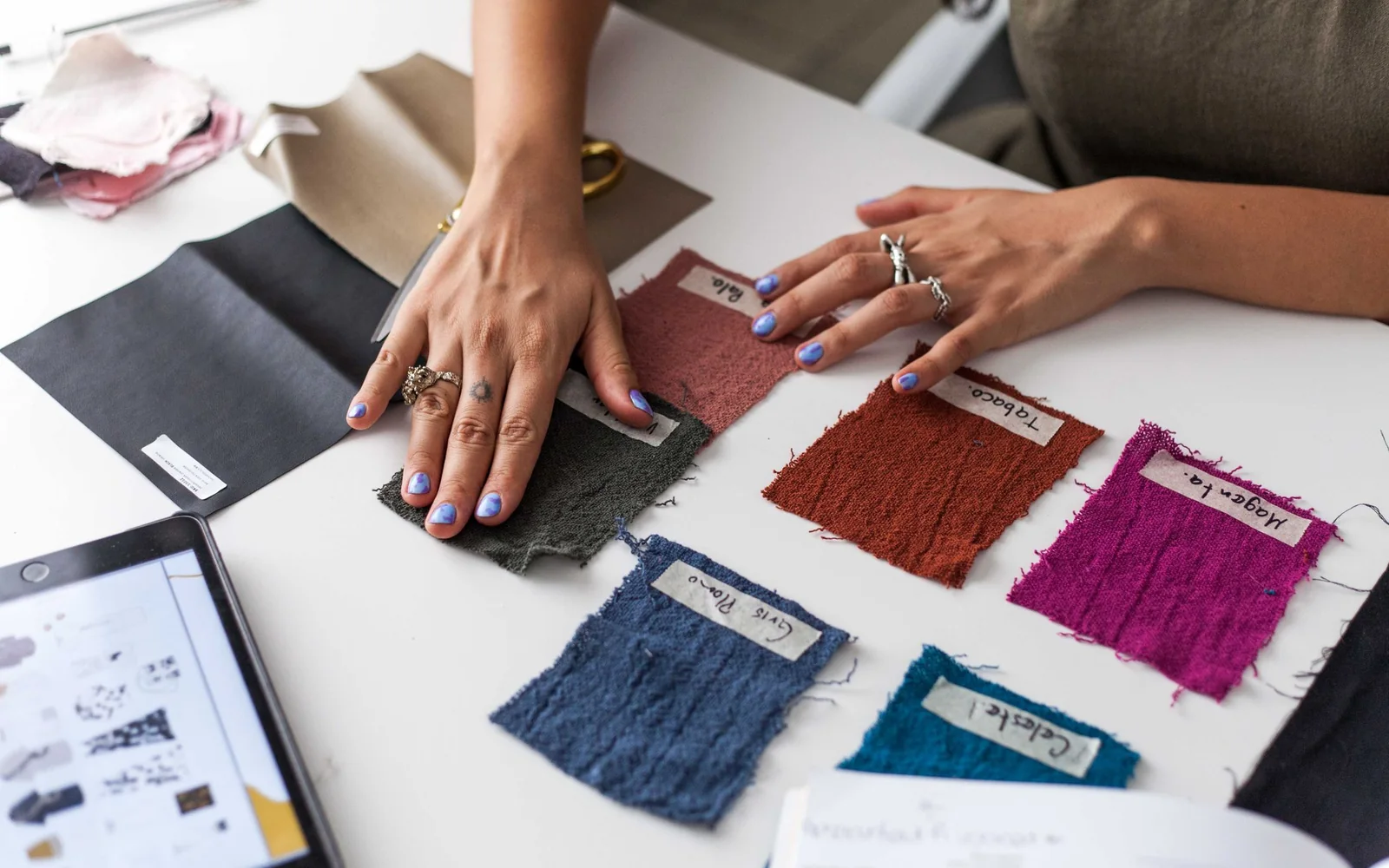
Use pieces large enough to judge drape, opacity, stretch, recovery, surface, and cutting direction. A tiny card can hide show-through, curling, skew, and scale. Shortlist against the written scorecard, then request enough material for a full garment and process testing.
Keep rejected swatches labeled with the reason. That record prevents the same unsuitable option from returning later and helps the team refine its language.
Evaluate commercial terms and continuity
Ask about minimum quantity by article and color, sample cut charges, dye or finish minimums, lead time, payment, packing, price unit, currency, commercial terms, and unused balance. Confirm whether quantity is purchased by weight, length, or another unit and how that converts to garment planning.
Stock availability can change between sampling and order. Agree how material is reserved, how long a quote remains valid, and what happens if the approved article is unavailable. For repeat programs, ask how the quality and color standard are retained. A "continuity" fabric still requires lot approval and a plan for changes.
Lower minimums can reduce opening inventory but may limit custom color or finish. Compare those trade-offs against unit cost, continuity, and the amount of demand evidence available.
Test the fabric in the product
Fabric test reports are useful, but the garment introduces cutting, sewing, pressing, decoration, washing, and wear. Make a full sample in the nominated article. Measure before and after care. Review drape, balance, opacity, seam appearance, puckering, growth, twisting, recovery, pilling, color movement, and hand.
Apply the actual print, embroidery, transfer, wash, coating, or finish. Heat and chemistry can alter color, stretch, or surface. Test body and trims together. If a garment combines dark and light panels, or shell and lining, assess transfer and compatibility as a complete system.
Define required tests based on product, claims, customer use, and selling market. Put pass criteria and approval stages into the quality plan.
Approve color and bulk material
Use a physical color standard and record the reference, material, light source or comparison method, date, and approver. Lab dips and strike-offs are development tools; bulk still needs review. Different surfaces can appear different even when measured similarly, so approve the visual relationship for coordinating materials.
Before cutting, verify the bulk article against the approved standard for identity, width, weight, shade, surface, defects, shrinkage, and other critical properties. Separate shade lots and plan markers so visible garment panels remain consistent. Retain a labeled bulk cutting for future reference.
Control the fabric record
Add the approved fabric to the bill of materials with supplier, article, composition, construction, weight, width, finish, color code, care, testing, and approval status. Store test reports, lab approvals, signed cuttings, bulk approvals, and correspondence under the same style and revision.
Substitutions require written review. A fabric with similar composition and weight can behave differently in shrinkage, recovery, drape, color, and decoration. If a substitution is necessary, repeat the checks that the change can affect and update the technical pack.
Send a source-ready request
Provide the fabric brief, garment sketch, end use, quantity, colors, target timing, destination, testing needs, and reference swatches. Ask the supplier to identify exact matches, closest alternatives, and every assumption. Give a response format so options can be compared consistently.
Follow the ordering process from sourcing through sample and pre-production approval. When the scorecard and product information are ready, share the sourcing brief. A fabric is not truly sourced when a swatch is found; it is sourced when the approved quality can be purchased, tested, controlled, and turned into the intended garment.