
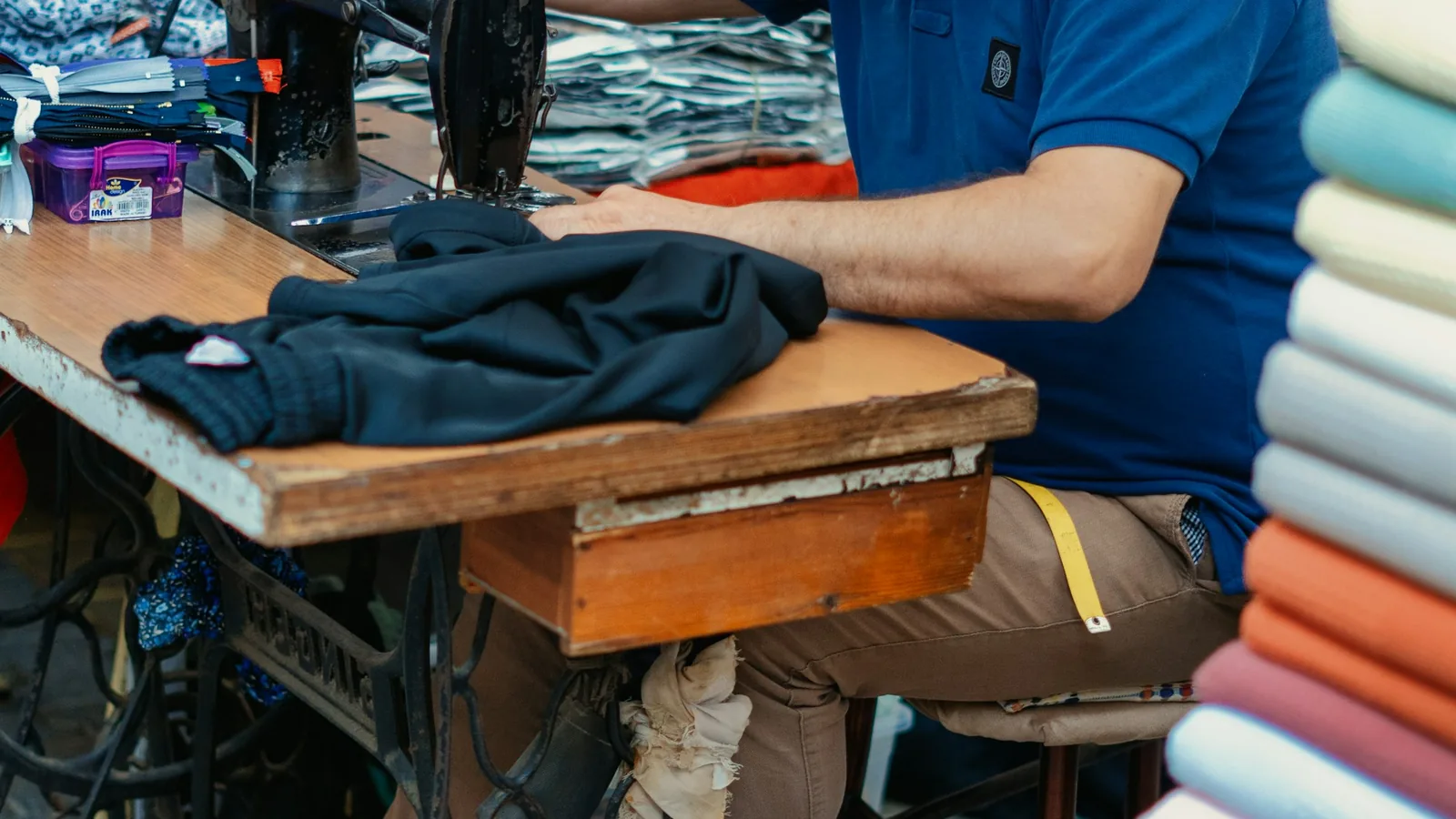
Build a Turkey-focused supplier shortlist by verifying legal identity, production sites, subcontractors, product fit, origin, quality, and cost.
A search for clothing manufacturers in Turkey should begin with verification, not a recycled list of company names. A website address, sales office, or statement about serving European buyers does not prove where a garment is cut and sewn. This guide explains how to build a Turkey-focused shortlist while checking the legal entity, production site, subcontractors, origin, product match, and landed commercial terms.
Define why Turkey is in the sourcing plan
Write the business requirement before contacting suppliers: product category, material, quality level, quantity, size range, customization, target market, delivery window, Incoterm, and communication needs. Decide which factors are essential and which are preferences. Geography should not substitute for product capability.
Separate full-package manufacturers, cut-make-trim units, knitters, mills, wash houses, printers, agents, and trading companies. Each can be useful, but the role and accountability must be explicit.
Verify legal identity and actual production location
Request the registered legal name, registration or tax details, ownership contact, physical production address, and address of every facility proposed for the order. Ask which processes occur at each site and which are subcontracted. Verify addresses independently and use a live video walkthrough, site visit, or qualified third-party audit when risk justifies it.
Do not treat "Turkish supplier," "designed in Turkey," or a Turkish office as proof of Turkish manufacture. Country of origin follows applicable rules based on production, not branding. The World Trade Organization provides an official overview of rules of origin; the importer should confirm the rules for its destination and product.
| Record | What it should establish | Follow-up |
|---|---|---|
| Business documents | Legal entity and authorized counterparty | Match contract and payment beneficiary |
| Facility evidence | Address, processes, equipment and workforce arrangement | Visit, audit, or live verification |
| Subcontractor map | Knitting, dyeing, washing, print, embroidery, sewing | Assign quality and compliance responsibility |
| Origin file | Material and transformation records | Confirm with importer or customs adviser |
| References | Recent capability in a comparable product | Obtain permission and verify contact |
Match the factory to the actual product
Ask for permission-cleared examples using comparable fabric, construction, decoration, and quality level. A knitwear specialist may not be suitable for structured jackets; a denim wash supplier may not control technical activewear. Review machinery, pattern and grading, sample room, material sourcing, quality system, and subcontracted processes in relation to the proposed styles.
Send the same structured request for quotation to every candidate. Include drawings, measurements, material specification, bill of materials, artwork, labels, packaging, sizes, quantities, testing, inspection, destination, and required delivery.
Assess materials, samples, and quality controls
Approve physical fabric and trim standards plus data for composition, construction, weight, width, shrinkage, colorfastness, pilling, and any claim. Confirm whether nominated materials are local, imported, stock, or made to order and how minimums affect the project.
Define sample types, revision rounds, costs, ownership, and approvals. A pre-production sample should use bulk-representative inputs. Quality plans should name measurements, tolerances, shade, workmanship, decoration, testing, inspection stages, packing, and remedies.
Calculate schedule and landed cost
Build timing from material, color, sample, size set, artwork, pre-production approval, line booking, production, inspection, export documents, and transport. Ask what changes during holidays or peak periods. Avoid comparing an ex-factory date with a required delivery date.
Normalize currency, Incoterm, development, tooling, material and color minimums, labels, packing, testing, inspection, inland transport, export charges, freight, insurance, duties, taxes, banking, and contingency. Payment should go to the verified contracting entity through an agreed secure method.
Shortlist with evidence and ongoing monitoring
Score legal and facility verification, product match, sample result, material control, quality, origin transparency, communication, schedule, and landed cost. Start with a controlled order if appropriate, retain approved standards, and monitor material lots, line status, inspection, packing, and shipping documents.
Issue one structured request to every candidate
Use the same technical package, quantities, destination, Incoterm request, target timeline, testing, inspection, and question list. Require candidates to identify exclusions, assumptions, proposed substitutes, production sites, subcontractors, and material sources. A supplier that flags missing information and explains tradeoffs provides stronger evidence than one that returns an immediate unsupported price.
Compare the resulting sample and response record, not just the presentation. Track technical questions, response accuracy, version control, approval discipline, and whether the proposed facility actually participated. References should be permission based, recent enough to matter, and relevant to the same product and service model.
Keep verification current through the order
Legal details, facilities, subcontractors, material sources, staff, and schedules can change after onboarding. Put notification and approval duties in the agreement, especially for site or input substitutions. Match invoices, packing lists, transport documents, production records, and origin support to the verified counterparty and order.
For a pilot, define success measures for sample accuracy, material lots, measurements, workmanship, testing, inspection, packing, documents, and delivery milestones. Retain the signed specification, sealed sample, facility map, origin file, test reports, inspection results, and corrective actions. Refresh time-sensitive records before reorders instead of treating a supplier check as permanent.
Focus any visit or audit on the proposed order. Trace one style from approved inputs through storage, cutting, work in progress, finishing, inspection, packing, and records. Interview the people who own technical decisions and quality escalation. If important work is off-site, include that location or obtain equivalent evidence. A general facility tour cannot confirm an undisclosed laundry, printer, embroiderer, or sewing subcontractor, and a valid record for one site should not be applied automatically to another.
Record the verification date, evidence owner, unresolved points, and next review trigger. This makes location and origin conclusions traceable instead of treating them as permanent assumptions.
Prepare through cut-and-sew development, the fabric guide, ordering workflow, and quality process.
Supplier capabilities, ownership, minimums, locations, and commercial terms change. Treat any comparison as a starting point and verify current details directly before making a purchasing decision.